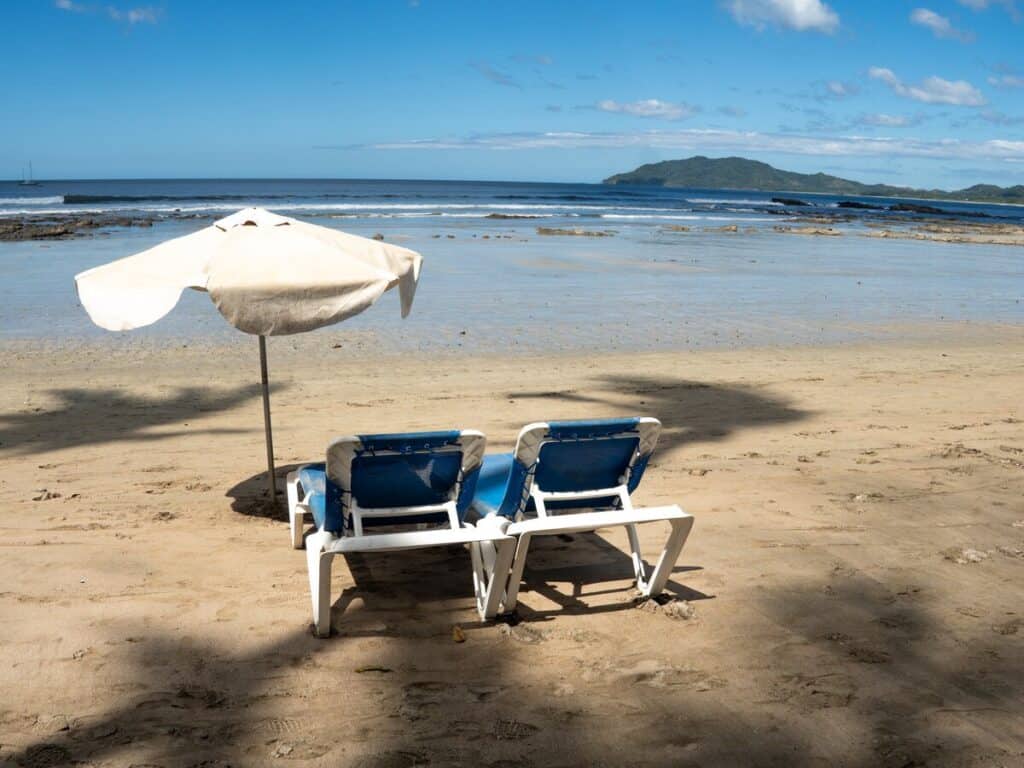
From Tamarindo, you can reach 12 very different beaches in Guanacaste, Costa Rica, in about an hour or less. Three are a walk or a short boat ride from town. Five are 25 to 40 minutes away by car, and four are worth a full day trip. Some have calm water for swimming and snorkeling, and others have strong surf.
We’re Tamarindo Guide, a free local business directory for Tamarindo. We’ve lived here for over 10 years, and these are the beaches we suggest when friends ask where to go next. For each one, you’ll find the drive time, what the sand and water are like, parking and a local tip.
How we picked the best beaches in Guanacaste, Costa Rica, for this list
We picked these 12 beaches for easy access from Tamarindo and for what each one is good for. Every beach here is about 1 hour or less from town by car. Together they cover calm swimming, surfing, snorkeling and quiet family days.
This isn’t a ranking, so each beach says who it suits. Playa means beach in Spanish. Drive times are from the center of Tamarindo, as of October 2026.
Beaches you can walk or boat to from Tamarindo
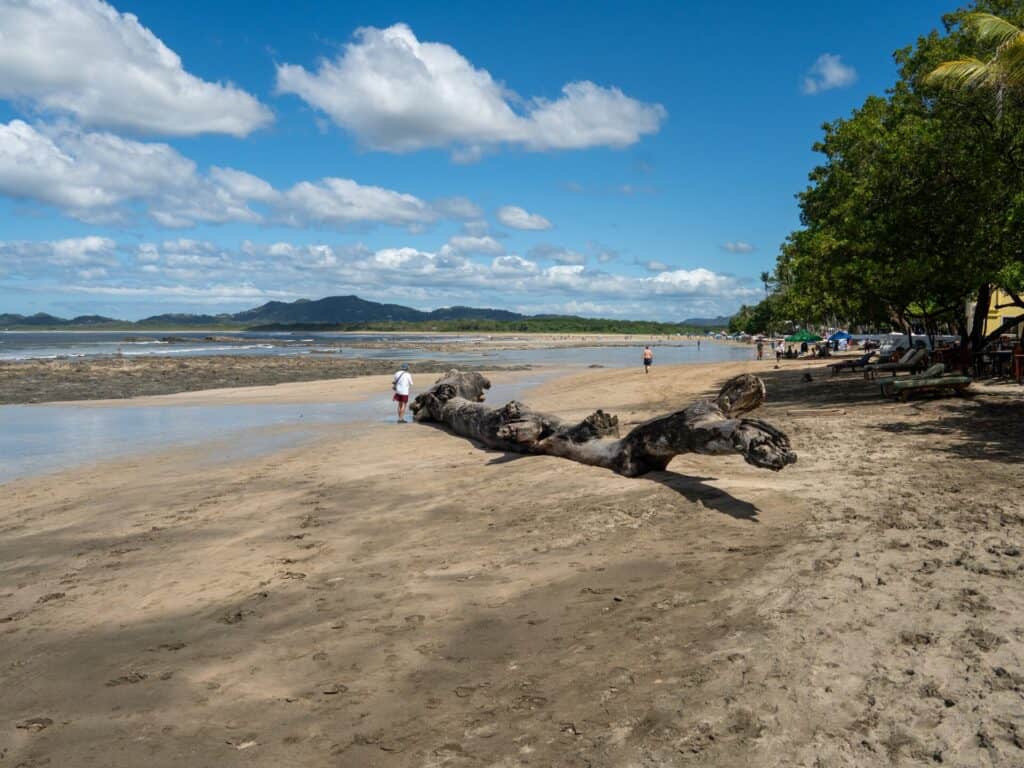
You can reach three beaches without a car. Playa Langosta is a walk south along the sand, and Playa Grande is a short boat ride across the estuary.
1. Playa Tamarindo
Tamarindo Beach is the long, curved beach in front of town. Most surf schools teach here, tour boats anchor in the bay, and people gather on the sand every evening for the sunset.
- Getting there: most hotels in the center are a short walk from the sand.
- Sand and water: light golden sand and warm water all year, with small, rolling waves in the middle of the bay.
- Good for: learning to surf, sunsets, long walks at low tide and swimming at the south end.
- Facilities and parking: beach bars and restaurants line much of the beach, and vendors rent chairs and umbrellas. Trees give shade at the back of the sand. Parking is limited in high season (December to April), so walk if you can.
- Local tip: for the quietest water, head to the south end, toward Langosta.
- Safety: don’t swim near the river mouth at the north end. The current is strong there, and crocodiles live in the estuary.
2. Playa Langosta
Playa Langosta is the next beach south of Tamarindo, and it’s much quieter. Homes and resort-style hotels line it instead of shops. It’s part of Las Baulas National Marine Park, so the beach closes at night (see Playa Grande below).
- Getting there: about 2 km from the center. Walk along the beach and over the rocks at low tide in 10 to 15 minutes, or drive in about 5 minutes. It’s also an easy ride by golf cart rental.
- Sand and water: soft sand with rocky sections. The San Francisco River meets the sea here and divides the beach in two.
- Good for: quiet walks and beach time, and surfing near the river mouth for intermediate surfers.
- Facilities and parking: a few hotel beach bars and some shade from trees, but no public restrooms. Park in small, informal spots on the side streets near the beach accesses.
- Local tip: check the tide before you walk. At high tide, the rocks between Tamarindo and Langosta are hard to cross.
- Safety: don’t swim near the river mouth or in the estuary. The rocky north part isn’t good for swimming.
3. Playa Grande
Playa Grande is the long, wild beach across the estuary from Tamarindo. It’s part of Las Baulas National Marine Park, a protected nesting beach for leatherback turtles, so very few buildings sit near the sand. The Costa Rica Tourism Board’s South Guanacaste guide notes that the park also includes Ventanas and Langosta, and that access hours are restricted.
- Getting there: small boats wait at the estuary in Tamarindo and cross in a few minutes. Agree on the price and return time first. By car, it’s about 25 minutes through Huacas and Matapalo.
- Sand and water: light sand, few rocks and stronger, faster waves than Tamarindo.
- Good for: surfing for intermediate and advanced surfers, and long, empty walks.
- Facilities and parking: a few small hotels and restaurants near the beach accesses, shade trees behind the sand and no lifeguards. Park in the small lots and roadside spots at the accesses.
- Local tip: the park beaches, including Playa Grande, Ventanas and Langosta, close at night from 6pm to 5am. From October to February, day visitors must leave by 5pm, so plan an early start.
- Safety: rip currents are common, and the waves are strong. Never walk or wade across the estuary from Tamarindo. Take the boat.
Beaches 25 to 40 minutes from Tamarindo
These five beaches make an easy half-day trip by car or shuttle. Ventanas is north, Avellanas and Negra are south, and Brasilito and Conchal sit side by side on Brasilito Bay.
4. Playa Ventanas
Playa Ventanas is a small bay north of Playa Grande, framed by rocky points. It’s also part of Las Baulas National Marine Park, and it gets far fewer visitors than Playa Grande.
- Getting there: about 30 minutes by car, past Playa Grande. You can also walk north from Playa Grande along the sand in about 30 minutes.
- Sand and water: light sand, strong waves and rocky points at both ends.
- Good for: tide pools at low tide, quiet beach time and photos.
- Facilities and parking: no facilities, so bring water, snacks and shade. A small lot at the entrance has no attendant.
- Local tip: go at low tide, when tide pools appear between the rocks. Wear water shoes.
- Safety: riptides form at some times of year, and the estuary behind the beach has crocodiles. Stay out of it.
5. Playa Avellanas
Playa Avellanas is a long, light-sand beach backed by trees instead of hotels. Surfers of all levels come here, and many visitors stop to photograph its wooden bridge.
- Getting there: about 30 minutes south by car, about 17 km, through Villarreal. Much of the road is now paved, but some stretches are still dirt or gravel.
- Sand and water: light sand with rocks in places. Waves are gentle on the inside and big on the outer reefs.
- Good for: surfing for beginners to experts, swimming on small-wave days and long walks.
- Facilities and parking: a few beach restaurants and surf shops, and lots of shade. Small lots sit near the beach accesses, and some have an attendant who expects a small tip.
- Local tip: beginners should stay on the inside waves near shore and leave the outer reefs to experienced surfers.
- Safety: swim only when the waves are small, and watch for rocks at low tide. Stay away from the estuary at the south end.
6. Playa Negra
Playa Negra is famous among surfers for its fast right-hand wave that breaks over a rock reef. Despite the name, which means “black beach,” the sand is light, with dark rocks along the sides.
- Getting there: about 35 to 40 minutes south by car, about 20 km, past Avellanas. The last part of the road may still be dirt, and a short trail leads to the sand.
- Sand and water: light sand, lots of rocks and powerful waves.
- Good for: watching good surfers, or surfing yourself if you’re intermediate or advanced.
- Facilities and parking: small surf hotels and restaurants nearby, and shade trees at the back of the beach. Park in small, informal spots near the trail.
- Local tip: go in the morning, when the wind is usually lighter. Sit in the shade and watch the surfers on the reef.
- Safety: this isn’t a swimming beach on most days. The reef is shallow and sharp, so beginners shouldn’t surf it.
7. Playa Brasilito
Playa Brasilito is a small, relaxed beach town on Brasilito Bay, with a soccer field next to the sand. It’s also the public way in to Playa Conchal.
- Getting there: about 30 to 35 minutes north by car, about 18 km, through Huacas.
- Sand and water: light gray sand, few stones and moderate waves.
- Good for: swimming, a relaxed beach day and a low-cost lunch.
- Facilities and parking: small shops and sodas (small family-run Costa Rican restaurants) near the beach, and some shade. Park near the soccer field. Attendants often ask for a small fee in colones (₡), the local currency.
- Local tip: eat lunch at a soda here. It usually costs less than a beachfront lunch in Tamarindo.
- Safety: the bay is usually calmer than Tamarindo, but watch for currents when the waves are bigger.
8. Playa Conchal
Playa Conchal is famous for its sand, made of millions of tiny broken shells. Concha means shell in Spanish. The water is often clear, calm and turquoise, which is unusual on this part of the Pacific.
- Getting there: drive to Brasilito, about 30 to 35 minutes, then walk south along the beach for about 15 minutes. At high tide, take the path over the small point.
- Sand and water: pale shell sand, clear water and gentle waves on most days.
- Good for: swimming, snorkeling along the rocks and a calm day with kids who can swim.
- Facilities and parking: few or none on the public part of the beach, so bring water, snacks and shade. Park in Brasilito, since Conchal has no public car access.
- Local tip: go early on a weekday. Weekends, Christmas and Easter week get crowded.
- Safety: the shell sand gets very hot by midday, so wear sandals. Leave the shells on the beach, since they’re what make Conchal special.
Beaches worth a full day trip
These four beaches take 40 minutes to about 1 hour to reach, so plan to stay most of the day. Playa Flamingo and Playa Potrero have restaurants and boat tours nearby. Playa Danta and Playa Junquillal are quieter.
9. Playa Flamingo
Playa Flamingo is a curved, white-sand beach with homes on the hills and boats anchored in the bay. It has more services than most beaches in this guide.
- Getting there: about 35 to 40 minutes north by car, about 23 km.
- Sand and water: white sand, few stones and moderate waves, with rocky points at both ends.
- Good for: swimming on calm days, snorkeling near the rocks, sunsets and boat trips.
- Facilities and parking: restaurants, shops and the Flamingo marina are close by, and trees give some shade. Street parking along the beach road fills up on weekends.
- Local tip: many sailing and catamaran tours leave from Flamingo and Potrero. A sunset sail is a good way to end the day.
- Safety: conditions vary. Watch for currents when the waves pick up.
10. Playa Potrero
Playa Potrero sits on a calm bay about 4 km long, north of Flamingo. It’s quieter than Flamingo, with a small village near the beach.
- Getting there: about 45 minutes north by car, about 25 km. Flamingo is about 5 minutes away, so many people visit both.
- Sand and water: gray sand, very few stones and calm water on most days.
- Good for: swimming, families and quiet beach walks.
- Facilities and parking: small restaurants and shops in the village, and shade trees in many places. Roadside parking is easier than in Flamingo.
- Local tip: swim in Potrero’s calm water in the morning, then have lunch in Flamingo.
- Safety: the water is usually calm, but rip currents can still form. Watch children closely.
11. Playa Danta and Playa Dantita (Las Catalinas)
Playa Danta is a calm beach of light gray sand in front of Las Catalinas, a small car-free town north of Potrero. Playa Dantita, a smaller cove next door, is quieter. A short path with a small wooden bridge leads to the sand.
- Getting there: about 50 minutes to 1 hour north by car, about 30 km, past Potrero.
- Sand and water: soft gray sand, gentle waves and few rocks, with views of the Catalina Islands.
- Good for: snorkeling near the rocky points, swimming and families.
- Facilities and parking: restaurants and shops in Las Catalinas, a short walk away. A small dirt lot at the end of the road serves both beaches, often with informal attendants, and fills up on weekends.
- Local tip: the rocky areas face different ways, so snorkel on whichever side is calmest that day.
- Safety: don’t leave anything in your car. Wear water shoes near the rocks, where sea urchins live.
12. Playa Junquillal
Playa Junquillal is a long, quiet beach south of Tamarindo, with gray sand, big waves and howler monkeys in the trees. It has few hotels and few people, even in high season.
- Getting there: about 45 minutes to 1 hour south by car, about 35 km. The area is rural, and some roads are rough. In the rainiest months, roughly August to November, a high car or 4×4 helps.
- Sand and water: gray sand, few stones and strong waves.
- Good for: long walks, sunsets, quiet time and tide pools at low tide.
- Facilities and parking: very few services, so bring what you need. Park in roadside spots near the beach accesses.
- Local tip: sea turtles nest here, and a local group, Verdiazul, patrols the beach at night to protect the nests. Never disturb a nesting turtle or use lights on the beach at night.
- Safety: the waves and rip currents are often too strong for casual swimming. Wade only in calm spots near the rocks at low tide.
Which beaches near Tamarindo are good for swimming?
The calmest swimming beaches near Tamarindo are usually Playa Conchal, Playa Potrero and Playa Danta. Brasilito and Flamingo are good on calm days, and in town, the south end of Tamarindo Beach is the most sheltered.
- Playa Conchal: clear, calm water on most days
- Playa Potrero: a calm bay with few stones
- Playa Danta and Playa Dantita: gentle waves
- Playa Brasilito: usually calmer than Tamarindo
- Playa Flamingo: good on calm days
- Playa Tamarindo, south end: the easiest swim without a car
Avoid Playa Grande, Playa Negra and Playa Junquillal unless the sea is flat, and never swim near a river mouth.
Which beaches near Tamarindo are good for surfing?
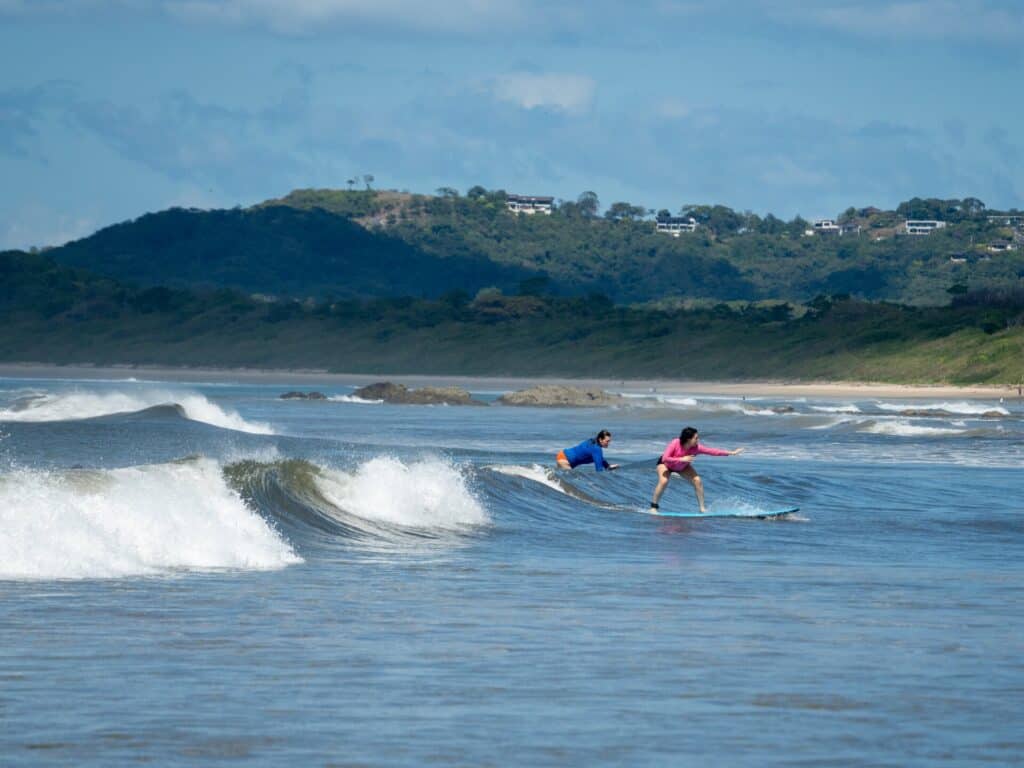
Beginners learn most easily at Tamarindo Beach and on the inside waves at Avellanas. Intermediate and advanced surfers head to Playa Grande, Langosta and Playa Negra. Conditions change with the swell and tide, so check the forecast first.
- Playa Tamarindo: long, slow waves for beginners. See our Best Surf Lessons list, ranked by Google reviews.
- Playa Avellanas: inside waves for beginners, outer reefs for experts
- Playa Langosta: a river mouth wave for intermediate surfers
- Playa Grande: a strong beach break for intermediate and advanced surfers
- Playa Negra: a fast reef wave for intermediate and advanced surfers only
- Playa Junquillal: big waves, mostly for experienced surfers
Where can you snorkel near Tamarindo?
The easiest shore snorkeling near Tamarindo is at Playa Conchal and at Playa Danta and Dantita. Fish gather around rocks close to the beach. Playa Flamingo has rocks at each end, and boat trips leave from there.
- Playa Conchal: clear water along the rocks. Bring your own mask.
- Playa Danta and Playa Dantita: three rocky areas around the two beaches
- Playa Flamingo: rocks at both ends, plus boat trips. See our Best Catamaran and Sailing Tours list, ranked by Google reviews.
- Playa Ventanas: tide pools at low tide, with small sea life
The Catalina Islands offshore are a popular dive site with strong currents. Ask the scuba diving centers about trips. Snorkel on a calm morning. The water is often clearer in the dry season, December to April.
Which beaches near Tamarindo are good for families?
Playa Potrero, Playa Danta and the south end of Tamarindo Beach suit families well. The water is usually calm, and food and restrooms are close by. Playa Conchal is calm too, but it has almost no facilities.
- Playa Tamarindo, south end: calm water, with restaurants a short walk away
- Playa Potrero: a calm bay, shade trees and a village for lunch
- Playa Danta: gentle waves, with Las Catalinas a short walk away
- Playa Brasilito: a relaxed beach with low-cost food nearby
- Playa Conchal: calm and clear, but bring water, snacks and shade
- Playa Junquillal: tide pools for older kids with an adult close by, but no swimming
Drive times from Tamarindo to each beach
Most beaches on this list are 25 minutes to 1 hour from Tamarindo by car. Times are from the center of town in normal traffic, as of October 2026. Allow more time on weekends and after heavy rain.
- Playa Langosta: about 5 minutes by car, or a 10 to 15 minute walk at low tide
- Playa Grande: a few minutes by boat, or about 25 minutes by car
- Playa Ventanas: about 30 minutes
- Playa Avellanas: about 30 minutes (17 km)
- Playa Brasilito: about 30 to 35 minutes (18 km)
- Playa Conchal: about 30 to 35 minutes to Brasilito, plus a 15-minute walk
- Playa Negra: about 35 to 40 minutes (20 km)
- Playa Flamingo: about 35 to 40 minutes (23 km)
- Playa Potrero: about 45 minutes (25 km)
- Playa Junquillal: about 45 minutes to 1 hour (35 km)
- Playa Danta (Las Catalinas): about 50 minutes to 1 hour (30 km)
Road conditions
- The roads north to Brasilito, Flamingo and Potrero are paved.
- Some roads south, toward Avellanas, Negra and Junquillal, still have dirt or gravel sections. Any car works in the dry season, but a higher car helps in the green season (rainy season), roughly May to November.
- September and October are the rainiest months, and roads get muddy and full of potholes. Never drive through a flooded road or a stream after heavy rain.
- Don’t drive on the sand. Vehicles aren’t allowed on Costa Rica’s beaches.
- Never leave bags, phones or passports in your car at the beach.
Getting there without driving
- Private driver: many shuttle companies do private trips to other beaches.
- Tours: tour agencies in Tamarindo book sailing, ATV and day tours that stop at nearby beaches.
- Golf cart: fine for Langosta, but carts usually aren’t allowed on the highways to farther beaches.
To see several beaches on your own schedule, a rental car is the easiest way. Compare local companies in our Best Car Rental list, ranked by Google reviews.
Planning a beach day? Find car rentals in Tamarindo, all listed free on Tamarindo Guide.
Beaches near Tamarindo FAQ
What is the nicest beach in Guanacaste, Costa Rica?
It depends on what you want from your beach day. For clear, calm water, many visitors choose Playa Conchal or Playa Danta. Surfers head to Avellanas and Playa Negra, and Playa Grande and Junquillal are good for quiet walks.
Can you swim in the ocean in Guanacaste?
Yes, you can swim at many beaches in Guanacaste, and the water is warm all year. Calm bays like Conchal, Potrero and Danta are the easiest. Surf beaches like Playa Grande and Playa Negra often have strong waves and rip currents.
Are beaches in Costa Rica public?
Yes, all beaches in Costa Rica are public. The Tico Times reported in June 2026 that under the Maritime Zone Law, beaches and the first 50 meters above the high-tide line are public. That’s why you can walk to Playa Conchal from Brasilito, even though resorts sit behind it.
Do you need a 4×4 to visit beaches near Tamarindo?
No, you don’t need a 4×4 for most beaches near Tamarindo in the dry season. The roads to Brasilito, Flamingo and Potrero are paved. A higher car or 4×4 helps for Junquillal and some dirt roads in the south during the rainy months.
Can you walk from Tamarindo to Playa Grande?
No, you shouldn’t walk across, because the estuary separates the two beaches and crocodiles live there. Take one of the small boats across the river mouth instead. You can also drive around in about 25 minutes.
Something out of date in this guide? Tell us and we’ll fix it.