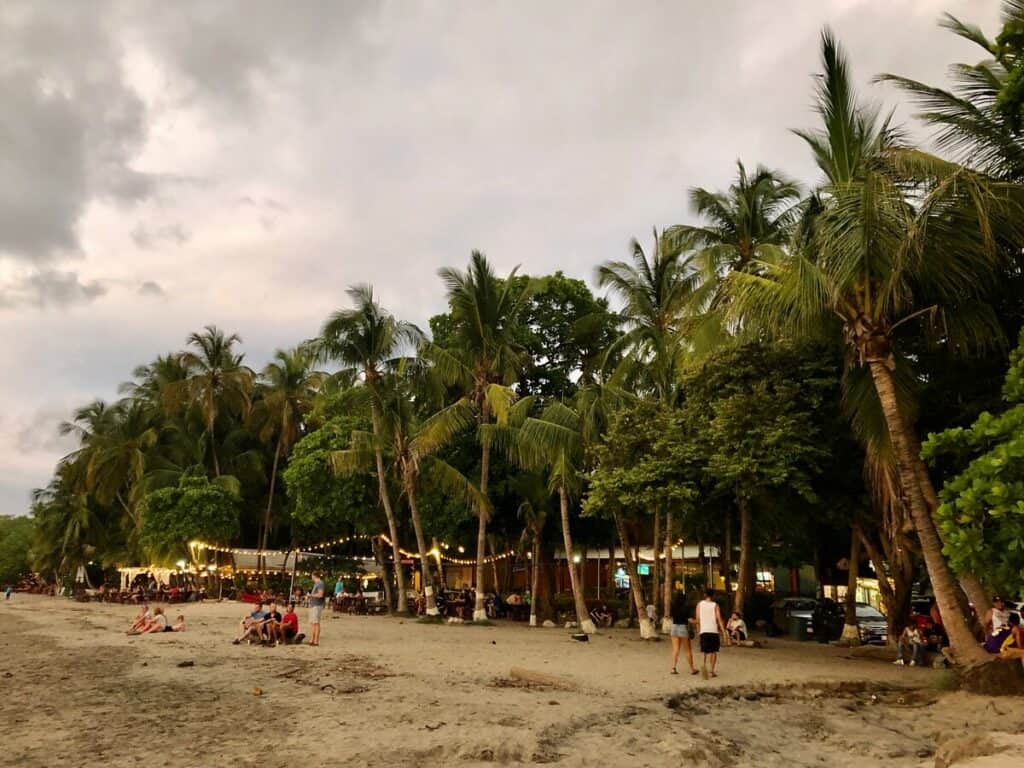
Is Tamarindo, Costa Rica safe? For most visitors, yes, as long as you use the same common sense you’d use in any busy beach town. The most common problem here is petty theft: bags taken from the sand and things stolen from parked cars. Violent crime against visitors is less common, but it does happen, so it’s worth knowing the basics before you arrive.
We’re Tamarindo Guide, a free local business directory for Tamarindo, and we’ve lived here for over 10 years. This is the honest answer we give friends and family when they ask us about safety. It covers theft, walking at night, the ocean, driving, solo travel and who to call if something goes wrong.
Is Tamarindo, Costa Rica safe for tourists?
Yes, Tamarindo is generally safe for tourists who take normal precautions. Most visits go without any problems. The risks are real but manageable: petty theft, rip currents on bigger-wave days and busy roads at night.
The US State Department rates Costa Rica Level 2, “Exercise Increased Caution,” because of crime. That advisory was issued on April 2, 2026, and it covers the whole country, not Tamarindo in particular. It says petty crime is common across Costa Rica and that violent crimes, such as armed robbery, homicide and sexual assault, also occur.
You may have read that violence in Costa Rica has gone up. That’s true. Costa Rica’s judicial police (OIJ) counted 873 homicides in 2025, the third-highest year on record. Most of them happened in the provinces of San José, Limón and Puntarenas, and the OIJ links most of them to fights between drug-trafficking groups, not to attacks on visitors.
Here’s how Tamarindo fits into that picture:
- It’s a busy tourist town. In high season (December to April), the main road and the beach are full of people until late at night.
- Petty theft is the main issue. Thieves look for easy chances, like a phone on a towel or a backpack on a car seat.
- Police are present. Tamarindo has a Tourist Police (Policía Turística) office, and officers from the Tourist Police and the national police (Fuerza Pública) patrol the town.
- Help is close. Tamarindo has medical clinics and pharmacies, and 911 works here like anywhere in the country.
What are the most common problems (and how to avoid them)?
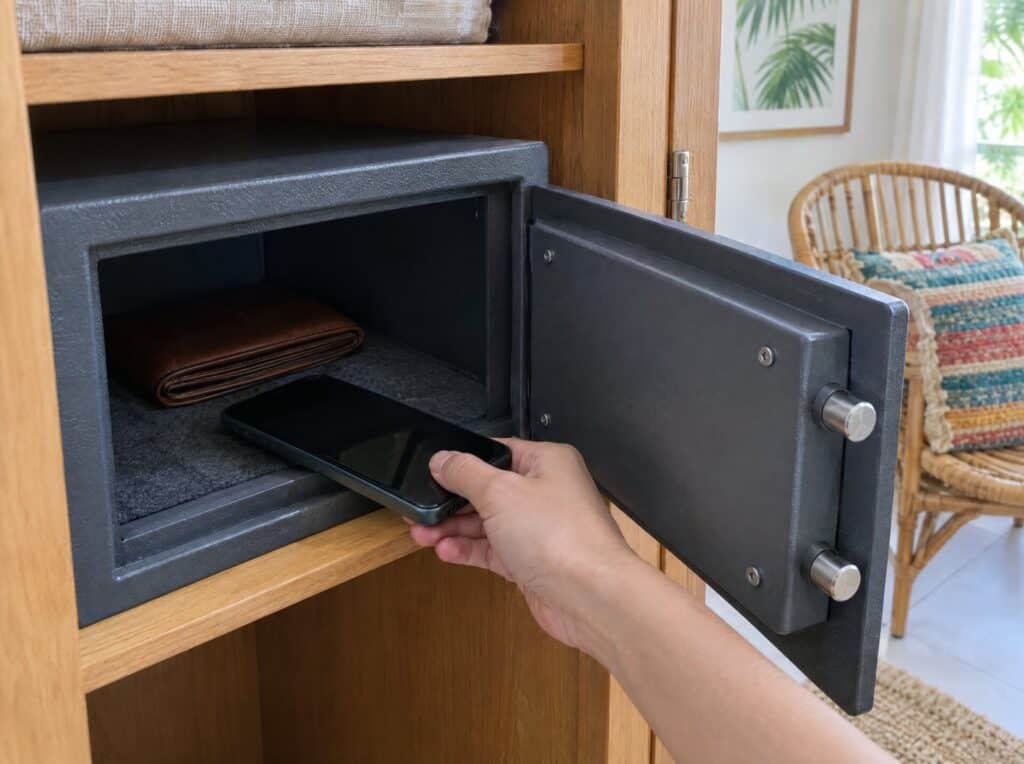
The most common problems in Tamarindo are theft from the beach, break-ins to parked cars and theft from rentals and hotel rooms. A few simple habits prevent most of them.
Theft on the beach
- Don’t leave bags, phones or keys on the sand while you swim or surf.
- Take only what you need to the beach: a towel, sunscreen, a little cash and a copy of your passport.
- If you’re in a group, take turns watching your things.
Car break-ins
- Never leave anything in your car, not even in the trunk. Break-ins are common at beach parking spots and at access points to quieter beaches.
- Leave the glove box open and the car empty, so it’s clear there’s nothing to take.
- Park in a lot with a guard or on a busy street when you can.
Your room or rental
- Use the safe in your room for passports, extra cash, cards and laptops.
- Lock doors and windows when you go out and at night, including sliding doors to a pool or balcony.
- Choose a rental with good reviews that mention security, such as a gated building or a guard.
Money and cards
- Use ATMs inside or next to a bank, during the day if you can.
- Carry one card and a little cash, and keep a backup card in the safe.
One more common problem has nothing to do with crime: the sun is strong all year, so use plenty of sunscreen and drink lots of water.
Is it safe to walk at night in Tamarindo?

Yes, it’s generally safe to walk in central Tamarindo at night, on the main road and the busy streets around it. Stay where there are lights and other people. The dark beach and quiet side roads are where problems are more likely.
In the evening, people walk between restaurants, bars and the weekly night market, and the center stays busy until late in high season.
Tips for nights out
- Walk with friends, especially after the bars close.
- Avoid the beach after dark, and never walk toward the estuary at the north end at night.
- Carry a phone, one card and a little cash. Leave your passport in the safe.
- Watch your drink, and don’t leave it alone at the bar.
- Take a taxi back if you’re staying outside the center or in Langosta. Official taxis are red with a yellow triangle on the door.
- Don’t count on Uber. It works in Tamarindo, but there are very few cars, especially late at night.
Is the ocean safe? Rip currents and crocodiles
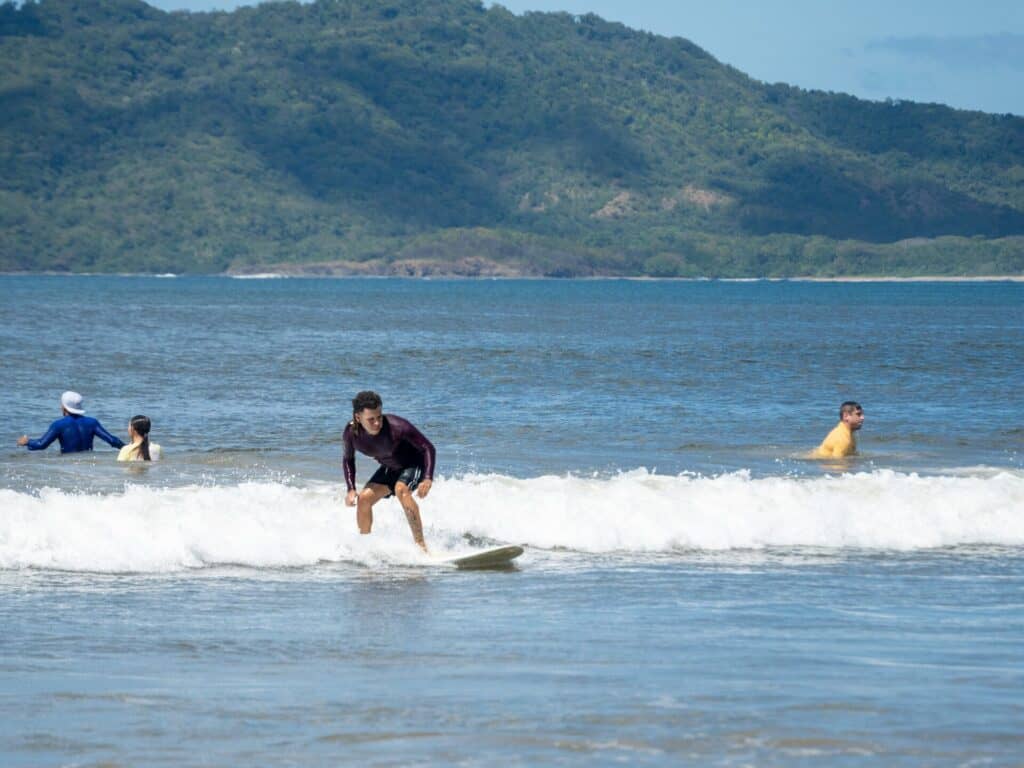
Yes, the ocean in Tamarindo is safe for swimming on most days, especially in the middle and south parts of the bay. The two things to know about are rip currents, which form when the waves are bigger, and crocodiles, which live in the estuary at the north end of the beach.
Rip currents
A rip current is a strong, narrow current that pulls water away from the shore. In Costa Rica, rip currents are the main cause of drownings at sea, so they’re worth understanding before you swim.
- If a rip current pulls you out, don’t fight it. Swim parallel to the shore until you’re out of the current, then swim back in. NOAA explains how to spot and escape a rip current.
- Don’t count on a lifeguard being nearby. Watch your kids closely in the water.
- Swim near other people, and ask a surf school about the conditions if you’re not sure.
- Avoid swimming at dusk, at night or after drinking.
- At low tide, watch for rocks under the water in a few spots.
If you want to surf in Tamarindo, take a lesson first. Instructors teach safety and pick the right spot for the day’s waves.
Crocodiles
American crocodiles live in the Tamarindo estuary, the river mouth at the north end of the beach, across from Playa Grande. They stay mostly in the estuary and the mangroves, and it’s rare to see one on the main beach.
- Don’t swim, wade or surf near the river mouth, especially at dusk or at night.
- Don’t walk across the estuary to Playa Grande. Take a short boat ride across instead.
- Never feed a crocodile or get close for a photo. The safest way to see one is on a guided estuary boat tour.
Is it safe to drive to and around Tamarindo?
Yes, driving to Tamarindo is fine for confident drivers, and the main road from Liberia airport is paved. The bigger risks are driving at night and on unfamiliar back roads. Most people who stay in the center don’t need a car at all.
Driving tips
- Arrive in daylight if you can. Many roads have no streetlights or shoulders, and people, bikes and animals use them at night.
- Watch for potholes, speed bumps and loose gravel, especially after rain in the green season (rainy season), roughly May to November.
- Some roads to other beaches are dirt, and some cross small rivers in the rainy season. Don’t cross water if you can’t see the bottom.
- Don’t drink and drive. Police run checkpoints, and Costa Rica’s drunk-driving laws are strict.
- Carry your passport when you drive, since police may check your entry stamp along with your license.
- Driving or parking on the sand is against the law. The fine is ₡61,000 (about $125) in colones (₡), the local currency, as reported by The Tico Times in July 2026.
- If someone stops to help with a flat tire, be careful. Drive slowly to a gas station or a busy place before you get out.
If you want to avoid the drive from the airport, book one of the shuttles from Liberia airport to Tamarindo. For day trips, compare car rentals in Tamarindo.
Golf carts
Golf carts are a popular way to get around Tamarindo and Langosta. Drive slowly, keep everyone seated, and don’t let kids drive. Never drive one after drinking. See golf cart rentals in Tamarindo if you want one for your stay.
Is Tamarindo safe for solo and female travelers?
Yes, many solo travelers and women traveling alone visit Tamarindo every year, and most have no problems. Hostels, surf camps and yoga retreats make it easy to meet people. Use the same care you would in any busy beach town at home.
Tips for solo travelers
- Tell someone where you’re going, and share your location with a friend.
- Don’t walk alone on the beach or on dark roads at night.
- Watch your drink, and only accept drinks you see being made.
- Use official taxis, and don’t accept rides from people you met that night.
- Keep your phone charged, and save 911 and your hotel’s number.
- If something feels wrong, go into a busy restaurant, hotel or shop and ask for help.
Emergency numbers and where to get help
In any emergency in Costa Rica, call 911. It’s free from any phone and covers police, ambulance and fire. Here’s who else to know about in Tamarindo.
Emergency and police
- 911: police, ambulance, fire and the Red Cross. Since 2025, 911 has had a dispatch desk for tourists, run by the Tourist Police, and many Tourist Police officers speak English.
- Emergencias 9-1-1 CR app: the official 911 app lets you ask for help and share your exact location, which helps if you don’t know the address.
- Tourist Police (Policía Turística): Tamarindo has a Tourist Police office. Officers can help with theft, lost items and directions.
If something is stolen
- File a report (a denuncia) with the OIJ, Costa Rica’s judicial police. For the Tamarindo area, the regional office is in Santa Cruz, about 30 minutes away by car.
- Ask for a copy of the report. Your travel insurance will usually need it.
- If your passport is stolen, contact your embassy in San José. US citizens can call the US Embassy at +506 2519-2000.
Medical help
- Tamarindo has private medical clinics for everyday problems, like cuts, stomach bugs and ear infections from the ocean.
- For serious emergencies, call 911. The main hospitals are in Liberia, about 1 hour 15 minutes away.
- You’ll find several pharmacies in Tamarindo, and pharmacists can help with small problems.
Find medical clinics in Tamarindo
Tamarindo safety FAQ
Is it safe for US citizens to go to Costa Rica right now?
Yes, most US citizens visit Costa Rica without problems, but the State Department asks travelers to “Exercise Increased Caution” (Level 2) because of crime, as of the April 2, 2026 advisory. In Tamarindo, the main risk is petty theft, so protect your things and avoid dark, empty places at night.
Are cartels a problem in Costa Rica?
Drug-trafficking groups are behind most of Costa Rica’s rise in homicides, according to the OIJ, but the violence is mostly between the groups themselves. It’s concentrated in parts of San José, Limón and Puntarenas, not in Tamarindo’s tourist areas. Visitors are rarely involved.
What is the safest part of Costa Rica?
No part of Costa Rica is completely free of crime, and the State Department’s advisory covers the whole country. Most violence happens in parts of San José, Limón and Puntarenas. Guanacaste, where Tamarindo is, had fewer homicides in 2025 than those provinces, according to OIJ figures.
Is Tamarindo worth visiting?
Yes, for most first-time visitors to Costa Rica, Tamarindo is worth visiting. It’s close to Liberia airport, it’s walkable, and you can book almost any tour in town. It’s also busier and more expensive than smaller beach towns.
Something out of date in this guide? Tell us and we’ll fix it.