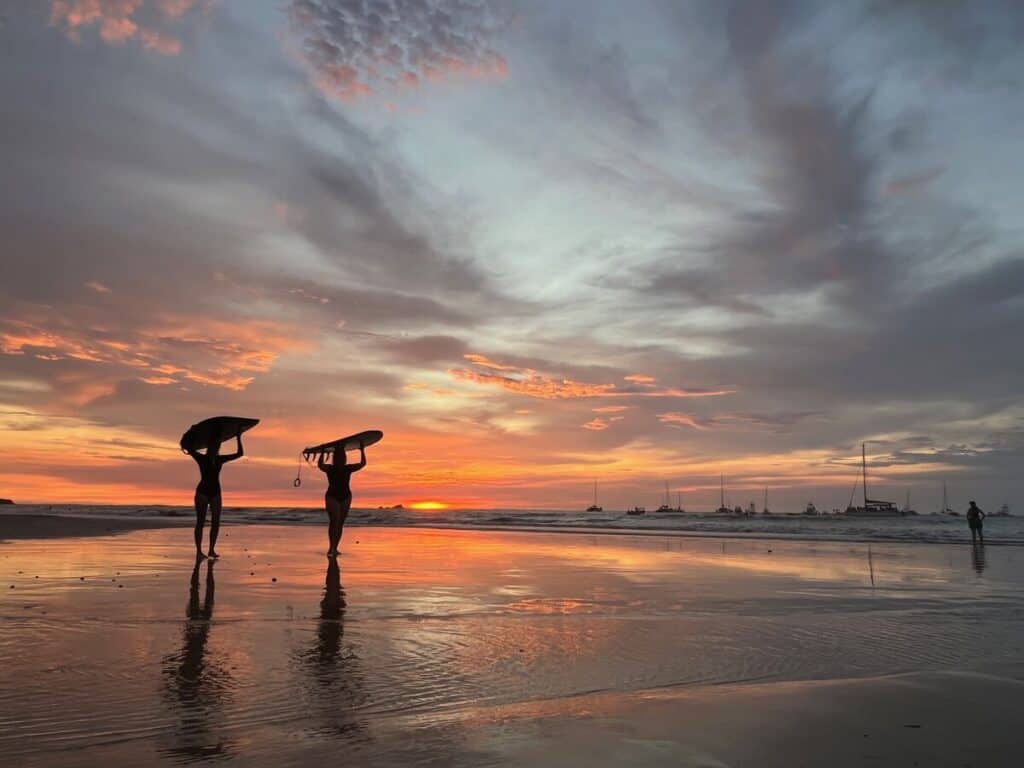
Tamarindo Beach (Playa Tamarindo) is a long, curved beach on the Pacific coast of Guanacaste, Costa Rica, right in front of the town. The waves are usually gentle enough to learn to surf, the water is warm all year, and the sun sets over the ocean every evening. It’s also where you’ll find most of the town’s surf schools, beach bars and tour boats.
We’re Tamarindo Guide, a free local business directory for Tamarindo. We’ve lived here for over 10 years, and this is the beach guide we’d give a friend: where to swim, where to surf, when the sun sets, and the few things to watch out for. For the rest of your trip, see our Tamarindo travel guide.
What is Tamarindo Beach like?
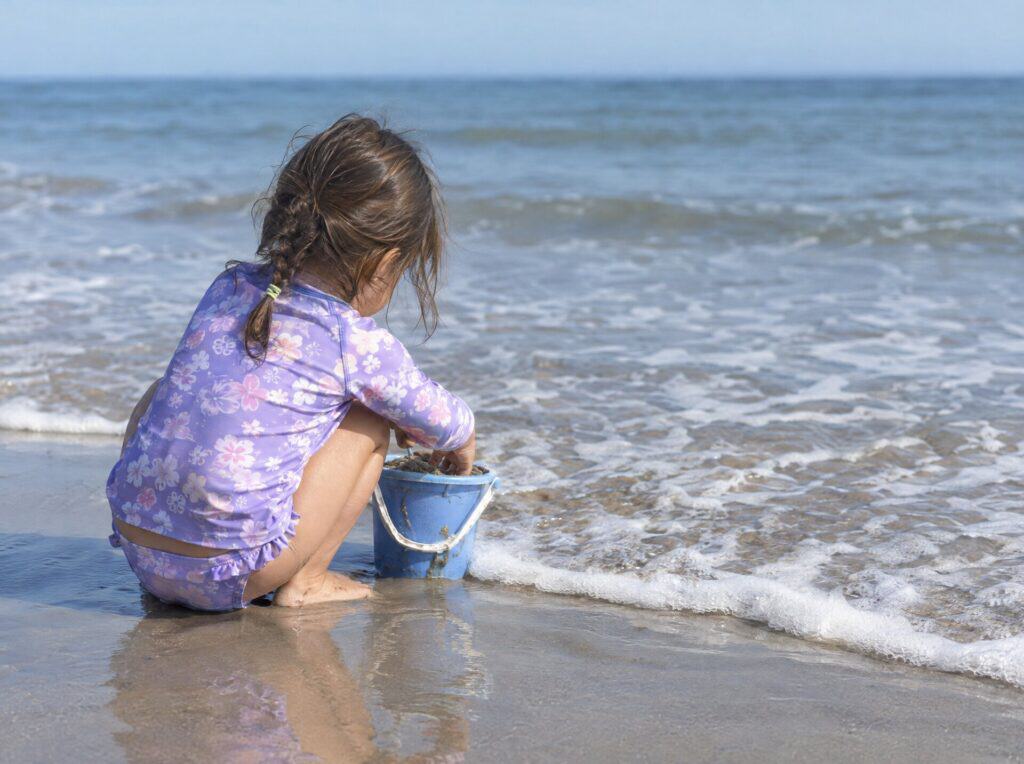
Tamarindo Beach is a wide, sandy beach that curves along a bay facing west. It runs from the estuary at the north end, across from Playa Grande, to the rocky point near Playa Langosta at the south end. Most of the town’s hotels, restaurants and surf schools sit right behind it.
What to expect
- Sand and water: light golden sand and warm water, usually in the low to mid 80s °F (about 28 to 30°C).
- Waves: mostly small, rolling waves in the middle of the bay, with bigger surf on the reefs and at the river mouth.
- Tides: the difference between low and high tide is often more than 2 meters (about 7 feet). At low tide the beach is very wide and rocks appear in a few spots. At high tide parts of the beach get narrow.
- People: the middle of the beach, in front of town, is the busiest. The south end, toward Langosta, is quieter.
- Shade: trees grow along much of the back of the beach, and vendors rent chairs and umbrellas in front of town.
Playa means beach in Spanish, so you’ll see the beach called Playa Tamarindo and Tamarindo Beach. Both are the same place.
Can you swim at Tamarindo Beach?
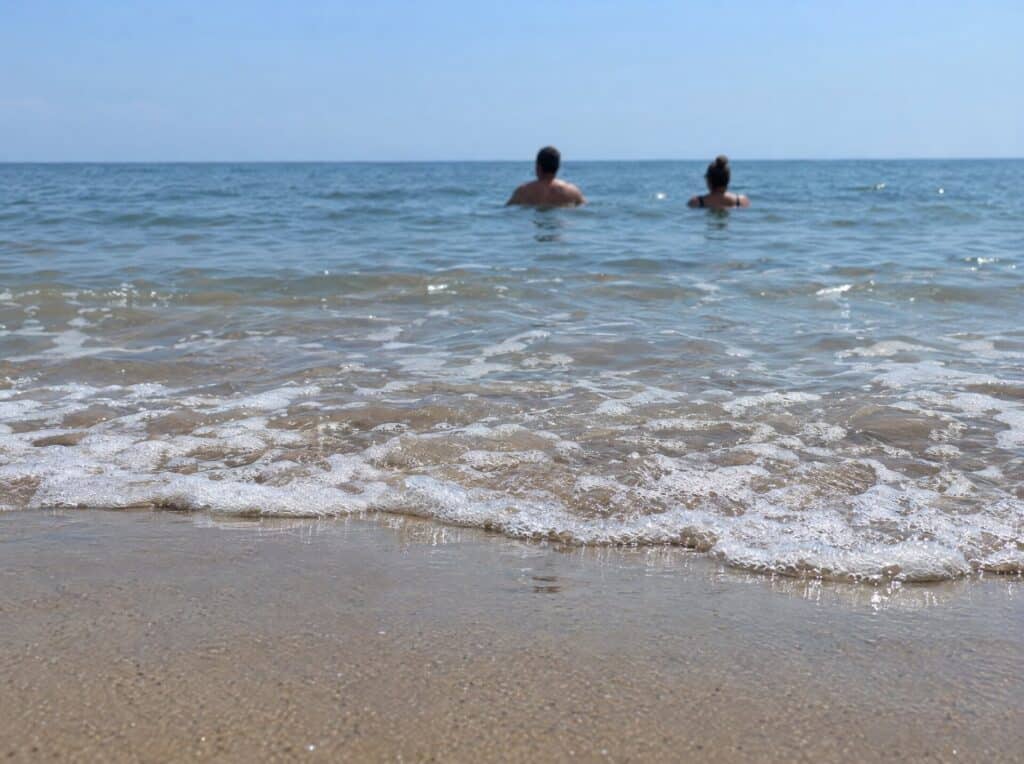
Yes, you can swim at Tamarindo Beach, and on most days the water is calm in the middle and south parts of the bay. The south end, toward Playa Langosta, is usually the most sheltered. Avoid swimming near the river mouth at the north end, and watch for rip currents when the waves are bigger.
Where to swim
- South end, toward Langosta: the calmest water on most days, and fewer surfers.
- Middle of the beach, in front of town: fine for swimming, but this is where the surf lessons happen. Stay out of the way of beginner surfers and their boards.
- North end, near the estuary: don’t swim near the river mouth. The current can be strong there, and crocodiles live in the estuary (more on that below).
Swimming safety tips
- Swim where other people are swimming, and don’t swim alone.
- Rip currents can form here when the swell is bigger. If one pulls you out, don’t fight it. Swim parallel to the shore until you’re out of the current, then swim back in. NOAA explains how rip currents work and how to spot them.
- Don’t count on a lifeguard being nearby. Watch your kids closely in the water.
- Avoid swimming at dusk, at night or at dawn.
- At low tide, look out for rocks under the water, especially near the middle of the bay.
If you’re not sure about the conditions, ask at one of the surf schools on the beach. They’re in the water every day and know what the waves are doing.
Where to surf on Tamarindo Beach (beginners vs. experienced)
Beginners should surf the beach break in the middle of the bay, in front of town, where most surf schools teach. Experienced surfers head to the reef breaks and the river mouth when the swell is good. Mid to high tide works best for most spots.
For beginners
- The main beach break: long, slow, rolling waves over sand. This is where most lessons happen, and it’s one of the easiest places in Costa Rica to stand up for the first time.
- The south end, toward Langosta: surf schools also bring students here when the middle of the beach is crowded.
- Take a lesson first. A 2-hour lesson covers safety, how to paddle and how to stand up, and the instructor picks the right spot for the day. See our Best Surf Lessons list, ranked by Google reviews.
For experienced surfers
- Pico Pequeño: a rocky reef break in the middle of town. It’s a single peak, so it gets crowded, and it’s shallow at low tide.
- Pico Grande: a more powerful reef wave further out, for advanced surfers when the swell is bigger.
- The river mouth (estero): a sandbar wave at the estuary that can be very good on the right swell and tide. Crocodiles live in the estuary, so surf it with care and never alone.
- Playa Grande and Langosta: both have stronger, faster waves than Tamarindo. Playa Grande is across the estuary to the north.
Surfboard rentals are easy to find along the beach and on the main road. Most shops rent by the hour, the day or the week. For more breaks, seasons and tips, see our Tamarindo surf guide.
What time is sunset in Tamarindo?
Sunset in Tamarindo is between about 5:15pm and 6:10pm all year. The earliest sunsets are in November, around 5:17pm, and the latest are in July, around 6:09pm. Costa Rica doesn’t use daylight saving time, so the change through the year is small.
Sunset times in Tamarindo by month (the 15th of each month, rounded)
- January: 5:40pm
- February: 5:52pm
- March: 5:54pm
- April: 5:54pm
- May: 5:58pm
- June: 6:06pm
- July: 6:09pm
- August: 6:02pm
- September: 5:44pm
- October: 5:26pm
- November: 5:17pm
- December: 5:24pm
We calculated these times for Tamarindo’s location. They change by only a few minutes within each month.
Sunset tips
- Get to the beach about 30 minutes before sunset. The sky often has the most color in the 15 minutes after the sun goes down.
- The beach faces west, so you can watch from almost anywhere on the sand.
- Many people watch from a beach bar or restaurant. See restaurants in Tamarindo and bars in Tamarindo.
- For sunset from the water, take a sunset sail. See our Best Catamaran Sailing Tours list.
- In the green season (May to November), clouds can cover the sunset, but they often make it more colorful too.
Are there crocodiles at Tamarindo Beach?
Yes, American crocodiles live in the Tamarindo estuary at the north end of the beach. They stay mostly in the estuary and the mangroves, and it’s rare to see one on the main beach. Avoid swimming or surfing near the river mouth, and you’re very unlikely to have any problem.
The estuary is part of Las Baulas National Marine Park, which also protects Playa Grande and Playa Langosta. It used to be called the Tamarindo Wildlife Refuge. Crocodiles are a normal part of this ecosystem, along with birds, crabs and monkeys.
Simple rules near the estuary
- Don’t swim, wade or surf near the river mouth, especially at dusk, at night or at high tide.
- Don’t walk across the river mouth to Playa Grande. Take a boat across instead.
- Never feed a crocodile or get close to take a photo.
- Keep dogs and small children away from the water’s edge near the estuary.
The safest way to see crocodiles is from a boat. Estuary tours go up into the mangroves with a guide, where you can see crocodiles, birds and sometimes monkeys from a safe distance. Many tour agencies in Tamarindo book this tour.
Beach rules, parking and facilities
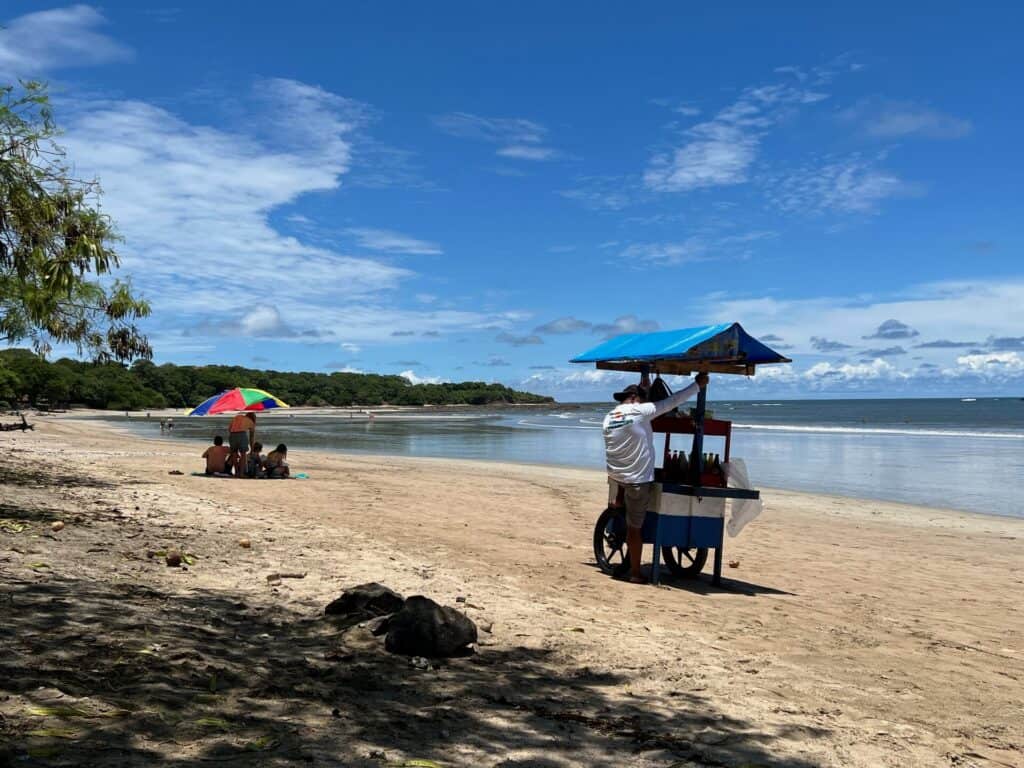
All beaches in Costa Rica are public, including Tamarindo Beach. Anyone can walk on the sand and swim, even in front of a hotel. Driving or parking on the sand is against the law. Parking near the beach is limited, so walking or a golf cart is often easier.
Beach rules
- Beaches are public. By law, the first 50 meters of land above the high tide line is a public zone, so no hotel or house can close the beach.
- No vehicles on the sand. Driving or parking a car, motorcycle or ATV on the beach is illegal in most cases, with a fine of ₡61,000 (about $125), as reported by The Tico Times in July 2026.
- Take your trash with you. There are few trash cans on the sand.
- Leave turtles and wildlife alone. Don’t touch nests or animals. Playa Grande and Playa Langosta are turtle nesting beaches inside Las Baulas National Marine Park, and they’re closed to visitors from 6pm to 5am.
Parking
- Parking close to the beach is limited, especially on weekends and in high season (December to April).
- You’ll find small lots and street parking along the main road. In many spots, a parking attendant (cuidacarros) watches the cars and expects a small tip.
- Never leave bags, phones or passports in your car, even for a short time.
- If you’re staying in town, walk. To get around Tamarindo and Langosta without parking stress, try a golf cart rental.
Facilities
- There are few public restrooms or showers on the beach. Most people use the restrooms at the beachfront restaurant or bar where they’re eating or drinking.
- Vendors rent beach chairs and umbrellas in front of town, usually for the day.
- Bring water, sunscreen and a hat. There’s shade under the trees at the back of the beach, but not near the water.
Tamarindo Beach live webcams
The easiest way to check Tamarindo Beach right now is the Tamarindo live surf cams from Witch’s Rock Surf Camp. The page streams two live cameras from the beach and shows the current surf, wind, tide times and water temperature.
What you’ll find on the page
- Two live camera views of the beach in front of the surf camp, one looking out at the waves and the bay.
- Current conditions: wave height, wind, buoy readings and water temperature.
- A 7-day tide table for Playa Tamarindo, with high and low tide times.
Surfers use it to check the waves before they paddle out. Visitors use it to see the weather before a beach day, or to get excited before a trip. Witch’s Rock Surf Camp is a surf hotel on Tamarindo Beach.
Our tip: check the tide table before you go. Low tide makes the beach wide and good for long walks. Mid to high tide is usually better for surfing.
Tamarindo Beach FAQ
Is Tamarindo Beach worth visiting?
Yes, Tamarindo Beach is worth visiting, especially if you want to learn to surf, watch the sunset and walk to restaurants and bars. It’s busier and more developed than nearby beaches like Playa Grande or Avellanas. If you want a quiet beach, visit the south end toward Langosta, or go early in the morning.
Does Tamarindo have a nice beach?
Yes, Tamarindo has a wide, sandy beach with warm water, gentle waves for beginners and sunsets over the ocean. The water isn’t as clear as at some white-sand beaches farther north, like Playa Conchal. For clearer water, see where to snorkel near Tamarindo. The beach is busiest in front of town.
Can you walk from Tamarindo to Playa Grande?
No, you shouldn’t walk across, because the estuary and river mouth separate the two beaches and crocodiles live there. Take a short boat ride across the estuary instead, or drive around, which takes about 25 minutes.
What should I be careful of at Tamarindo Beach?
Watch for rip currents when the waves are bigger, and avoid the river mouth at the north end. Don’t leave bags on the sand while you swim or anything in your car. Use plenty of sunscreen, because the sun is strong all year.
Is the water warm at Tamarindo Beach?
Yes, the water at Tamarindo Beach is warm all year, usually in the low to mid 80s °F (about 28 to 30°C). Most people swim and surf without a wetsuit. A rash guard helps protect you from the sun and from board rash.
Ready for the waves? Find surf lessons and board rentals in Tamarindo, all listed free on Tamarindo Guide.
Something out of date in this guide? Tell us and we’ll fix it.