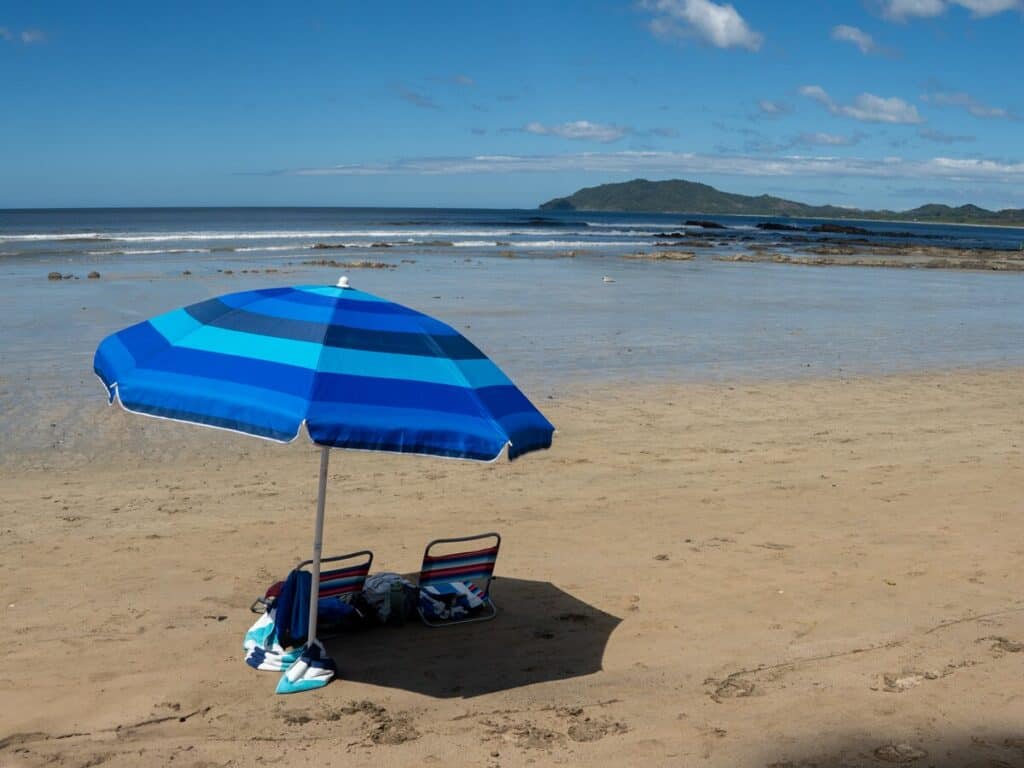
Tamarindo weather is hot and sunny for most of the year, with daytime highs around 33°C (91°F) and warm nights around 22°C (72°F). There are two seasons: the dry season from December to April and the green season (rainy season) from May to November. The ocean stays warm all year, so it’s always beach weather.
We’re Tamarindo Guide, a free local business directory for Tamarindo, Costa Rica, and we’ve lived here for over 10 years. This guide explains the weather month by month, using data from Costa Rica’s national weather service, plus what each season means for your trip. For everything else, from getting here to where to eat, see our travel guide to Tamarindo.
What is the weather like in Tamarindo?
The weather in Tamarindo is hot, sunny and dry from December to April, and hot, green and wetter from May to November. Temperatures change very little during the year. What changes is the rain, the wind and how green the hills are.
Tamarindo is in Guanacaste, on Costa Rica’s North Pacific coast. According to the Instituto Meteorológico Nacional (IMN), Costa Rica’s national weather service, the North Pacific is one of the driest and hottest regions of the country. On the Nicoya Peninsula, where Tamarindo sits, daytime highs average about 33°C and nights about 22°C, with about 1,900 mm (75 inches) of rain a year.
Tamarindo weather at a glance
- Daytime highs: usually 31 to 34°C (88 to 93°F)
- Nights: usually 22 to 24°C (72 to 75°F)
- Ocean temperature: usually 27 to 30°C (81 to 86°F), so most people swim and surf without a wetsuit
- Sunset: between about 5:15pm and 6:10pm all year (see Tamarindo sunset times by month)
- Humidity: lower in the dry season, higher and stickier in the green season
Dry season vs. green season in Tamarindo
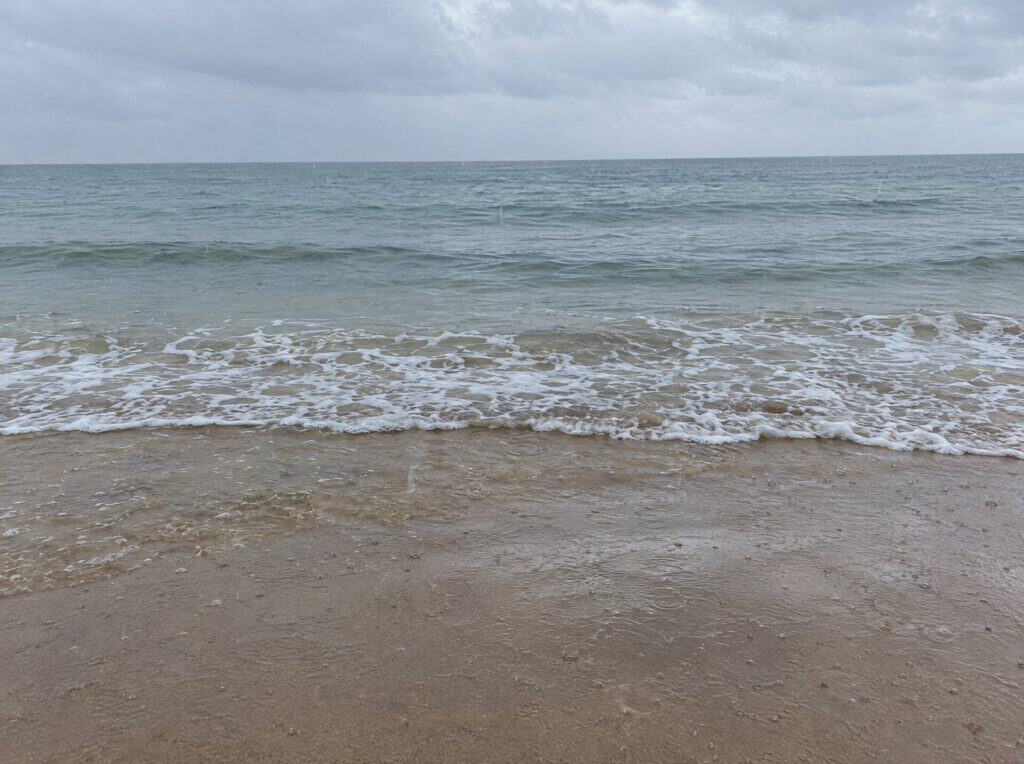
The dry season (December to April) brings sunny days, almost no rain and strong winds, but also the most visitors and the highest prices. The green season (May to November) brings afternoon rain, green hills, fewer people and lower prices. Both seasons are hot.
Dry season (high season), December to April
- Sunny almost every day. Only about 4% of the year’s rain falls from December to March, according to the IMN.
- Strong northeast trade winds blow, especially from January to March. On the beach this wind blows offshore, which smooths the waves for surfers in the morning.
- The hills turn brown and dry, and the roads get dusty.
- It’s the busiest and most expensive time of year. Book hotels, shuttles and popular tours ahead.
Green season (rainy season), May to November
- Mornings are often sunny. Rain usually comes as afternoon or evening showers, sometimes with thunder.
- The hills and trees turn bright green, and the air feels fresher after the rain.
- There are fewer visitors and lower prices, except in late June and July, when school holidays fill the town again.
- Some roads get muddy, and a few restaurants and hotels close for part of September and October.
We call it the green season, not the off-season, because Tamarindo stays open and lively for most of it.
Tamarindo weather month by month
Here’s what each month is usually like in Tamarindo. These are typical patterns. A dry year or a wet year can shift them by a few weeks.
- January: dry and sunny, with strong winds. Busy, especially in the first week after New Year’s.
- February: usually the driest month of the year. Sunny, windy and busy.
- March: dry, sunny and getting hotter. Easter week (Semana Santa) is often in March or April and fills the town with Costa Rican families.
- April: the hottest time of year and a transition month. The first showers can arrive late in the month.
- May: the rains start, usually in the last third of the month. Hot and humid, with sunny mornings.
- June: the first rainy peak, with afternoon thunderstorms and heavy showers. Very green.
- July: the veranillo, a short “little summer” when the trade winds return and the rain often eases for a few weeks. Busy with US and Costa Rican school holidays.
- August: the veranillo can continue early in the month, then the rain returns. Fewer visitors.
- September: one of the two wettest months. The quietest time in town, with the lowest prices. Some businesses close for a few weeks.
- October: the other wettest month, sometimes with several rainy days in a row when tropical storms pass nearby. Quiet, with some closures.
- November: the rain tapers off and the dry season begins to return. The hills are still green and prices are still lower.
- December: the dry season returns, with sunny days and strong winds. The holidays are the busiest weeks of the year.
The IMN describes this same pattern for the whole North Pacific: a dry season from December to March, a first rainy period from May to August with its peak in June, a short veranillo in July and August, and a second rainy period from September to November with the most rain in September and October.
When is the rainy season in Tamarindo?
The rainy season in Tamarindo runs from May to November. The rains usually start in late May, ease for a few weeks in July, and are heaviest in September and October. November is a transition back to the dry season.
Rain in Tamarindo rarely lasts all day. A typical green-season day starts sunny and hot, clouds build in the afternoon, and a shower or thunderstorm passes in the late afternoon or evening. You can still go to the beach, surf and take morning tours.
Tips for the rainy season
- Plan beach time and tours for the morning, when the weather is usually clearer.
- In September and October, check that the restaurants and tours you want are open before you go.
- Direct hurricane hits are rare in Costa Rica. But in September and October, storms passing nearby can bring a few days of steady rain.
- If you’re driving to day trips, leave extra time. Dirt roads can get muddy and rivers can rise after heavy rain.
What is the best time to visit Tamarindo?
The best time to visit Tamarindo for sunny, dry beach weather is December to April. For lower prices and fewer people with good weather, visit in July or in May, June, August and November. September and October have the most rain and the fewest open businesses.
The best time for you depends on what you want
- Sun and dry days: December to April. February is usually the driest month.
- Lower prices with mostly good weather: May, early June, July and November.
- The quietest town and the lowest prices: September and October, if you don’t mind rain and a few closures.
- Avoiding crowds: skip Christmas, New Year’s and Easter week, when hotels fill and prices are highest.
In high season, book your place to stay early. See hotels in Tamarindo for options.
Best time for surfing, turtles and whale watching
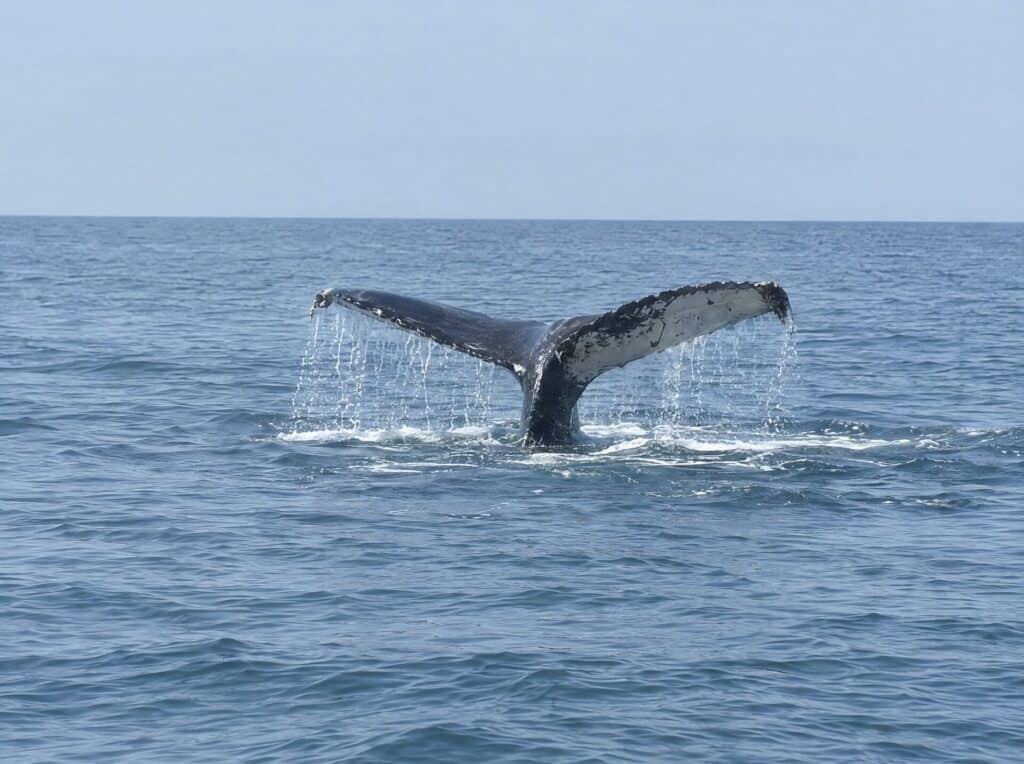
Tamarindo is good for surfing all year, but the waves are smaller and cleaner in the dry season and bigger in the green season. Turtle tours from Tamarindo run mostly from October to April, and the biggest olive ridley arribadas at Playa Ostional come from July to November. Humpback whales visit the waters of northern Guanacaste from December to April.
Surfing
- Beginners: any month works. In the dry season, offshore winds and smaller waves make mornings smooth and easy to learn on.
- Experienced surfers: the green season (about April to October) brings bigger swells from the south, especially to the reef breaks and the river mouth. Our guide to surfing in Tamarindo covers each break.
- Find surf lessons and board rentals in Tamarindo, or see our Best Surf Lessons list, ranked by Google reviews.
Sea turtles
- Turtle tours from Tamarindo go to small beaches near Matapalo, about 40 minutes away, mostly from October to April. Leatherbacks still nest on Playa Grande from about October to February or March, but they’re now very rare, and the night tours there stopped in 2019.
- Olive ridley turtles come ashore by the thousands in mass nestings called arribadas at Playa Ostional, about 1.5 to 2 hours south of Tamarindo. The biggest arribadas usually happen in the rainy season, especially September and October.
Whale watching
- Humpback whales from the North Pacific come to Costa Rica to mate and give birth. The Costa Rica Tourism Board’s Northern Guanacaste guide says they can be seen in northern Costa Rica from December to April, and lists Tamarindo among the towns where whale watching now happens.
- Whales are sometimes seen on sailing and snorkel trips from Tamarindo, but sightings aren’t certain. See our Best Catamaran Sailing Tours list.
What to pack for Tamarindo’s weather
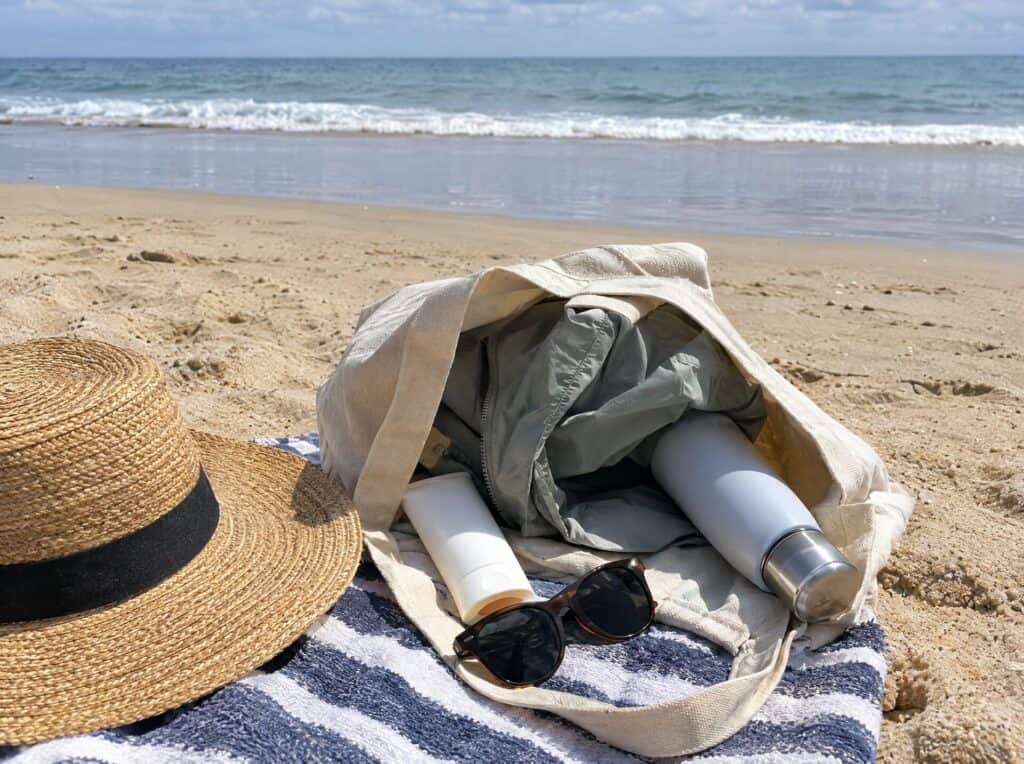
Pack light, breathable summer clothes, strong sun protection and sandals for any month. In the green season, add a light rain jacket and bug spray. You won’t need warm clothes unless you plan a trip to the mountains or the volcano.
Pack for any month
- Light, breathable clothes: shorts, T-shirts, sundresses, linen shirts
- Swimsuits, and a rash guard (a long-sleeve swim shirt) for surfing and sun protection
- Sunscreen with a high SPF, a wide-brim hat and sunglasses
- Sandals or flip-flops, plus closed shoes for hikes and ATV tours
- A reusable water bottle
- A small dry bag for boat tours and beach days
Add for the green season (May to November)
- A light rain jacket or a small umbrella
- Bug spray, since mosquitoes are more active after the rain
- Quick-dry clothes, because things dry slowly when it’s humid
Add for day trips
- A light long-sleeve layer for air-conditioned buses and the cooler air at Rincón de la Vieja volcano
Sunscreen and bug spray cost more in Tamarindo than at home, so bring enough for your whole trip.
Tamarindo weather FAQ
What is the rainy season in Tamarindo, Costa Rica?
The rainy season in Tamarindo is from May to November, also called the green season. Rain usually falls as afternoon or evening showers, and mornings are often sunny. September and October are the wettest months.
Does it rain all day in Tamarindo in the green season?
Usually not. Most green-season days are sunny in the morning, with a shower or thunderstorm in the afternoon or evening. Longer rainy spells of a few days can happen in September and October.
Is September a good time to visit Tamarindo?
September is a good time to visit if you want the lowest prices and the quietest beaches, and you don’t mind rain. It’s one of the two wettest months, and some restaurants and hotels close for a few weeks. Check that the places you want to visit are open before you go.
What is the water temperature in Tamarindo?
The water in Tamarindo is warm all year, usually 27 to 30°C (81 to 86°F). Most people swim and surf without a wetsuit. A rash guard protects you from the sun and from board rash.
What is the hottest month in Tamarindo?
April is usually the hottest month in Tamarindo, at the end of the dry season, before the rains cool things down a little. March and May are also very hot.
Whatever the weather, there’s always something to do. Find tours in Tamarindo for any season, all listed free on Tamarindo Guide.
Something out of date in this guide? Tell us and we’ll fix it.