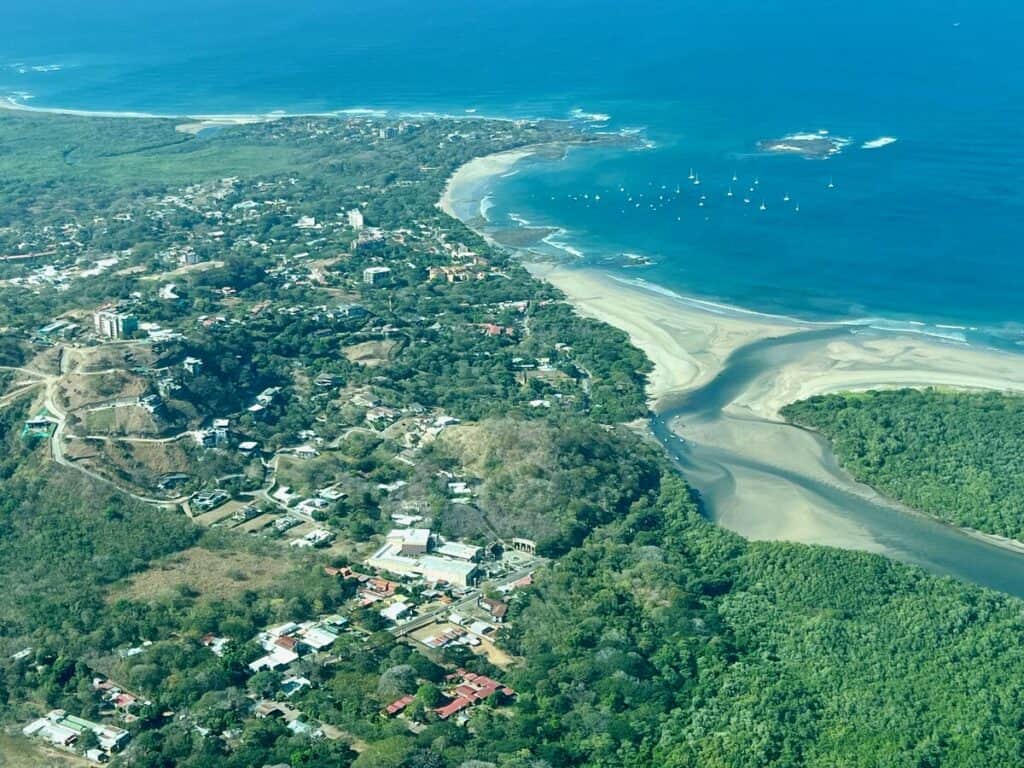
Tamarindo, Costa Rica is a beach town on the Pacific coast of Guanacaste, about 1 hour 15 minutes by car from Liberia airport (LIR). It’s known for beginner-friendly surfing, sunsets over the bay and a walkable center full of restaurants. Most visitors come for a week of beach, tours and good food.
We’re Tamarindo Guide, a free local business directory for Tamarindo. We’ve lived here for over 10 years, and we list local businesses for free, from surf schools and shuttles to pharmacies and grocery stores. We check every listing against current Google data. This guide answers the questions we hear most from first-time visitors, with the local tips that make a trip easier. For short lists by category, see our yearly Best Of lists for Tamarindo, ranked by Google reviews.
Where is Tamarindo, Costa Rica?
Tamarindo is on the Pacific coast of Costa Rica, in the province of Guanacaste, at the north end of the Nicoya Peninsula. It’s about 70 km (a 1 hour 15 minute drive) southwest of Liberia airport and about 260 km (4.5 to 5 hours by car) from San José.
The town sits on a curved bay that faces west, which is why the sunsets are a daily event. To the north, an estuary separates Tamarindo from Playa Grande (playa means beach). To the south, a short walk over the rocks takes you to Playa Langosta.
Quick facts
- Province: Guanacaste, in the canton (county) of Santa Cruz
- Nearest international airport: Liberia airport (LIR), about 1 hour 15 minutes away
- Time zone: Central Time (UTC−6), with no daylight saving time
- Currency: colones (₡), the local currency; US dollars are widely accepted
- Climate: dry season December to April, green season (rainy season) May to November
“Downtown” Tamarindo is small. The main road runs along the beach, and most restaurants, tour offices, surf shops and hotels are on it or one street back. You can walk from one end of the center to the other in about 15 minutes.
What is Tamarindo known for?
Tamarindo is known for surfing, sunsets, nightlife and its many restaurants. It’s one of the easiest places in Costa Rica to learn to surf, and it’s a convenient base for tours, beaches and wildlife in Guanacaste.
What brings people here
- Beginner surfing. The waves in the middle of the bay are usually small and gentle, and surf schools and board rentals line the beach.
- Sunsets. Tamarindo Beach faces west, so people gather on the sand every evening. Many sailing tours leave in the late afternoon to watch the sunset from the water.
- Turtles. Leatherback sea turtles still nest on Playa Grande, across the estuary, inside Las Baulas National Marine Park. They’re now very rare, and there’s no turtle watching there. Night turtle tours go to beaches near Matapalo, about 40 minutes away, and to Playa Ostional.
- Food and nightlife. Restaurants, cafes, bars and clubs are all within a short walk or drive.
- Fishing and diving. Sportfishing boats and dive shops run trips from Tamarindo and nearby Flamingo.
Tamarindo is also popular with long-term residents from North America, Europe and Latin America. That’s part of why it has more services, like clinics, gyms, language schools and international grocery stores, than most Costa Rican beach towns. If you’re thinking of buying here, see how Tamarindo’s real estate market is doing in 2026.
Is Tamarindo worth visiting?
Yes, for most first-time visitors to Costa Rica, Tamarindo is worth visiting. Liberia airport is close, you can walk to restaurants and the beach, and you can book almost any tour in town. The trade-off is that it’s busier and more expensive than smaller beach towns.
Let’s be honest about the downsides. Tamarindo is more developed than nearby towns like Nosara or Playa Grande, and some visitors find it too touristy. Prices are high for Costa Rica, so check what things cost in Tamarindo before you plan your budget. The UK Post Office’s 2024 Worldwide Holiday Costs Barometer ranked Tamarindo the most expensive of 40 destinations worldwide. Traffic on the main road gets heavy in high season.
Tamarindo is a good fit if you:
- Are visiting Costa Rica for the first time and want things to be easy
- Are traveling with kids and want a walkable town with lots of choices
- Want to learn to surf or try several tours in one week
- Like having many restaurants and some nightlife close by
It may not be the right fit if you:
- Want a quiet beach with few people and no nightlife
- Are traveling on a tight budget (though there are ways to save, see below)
- Want rainforest and wildlife right outside your door
Many visitors split the difference. They stay in Tamarindo for a few nights and spend the rest of the trip near Rincón de la Vieja volcano, Arenal or a quieter beach.
When is the best time to visit Tamarindo?
The best time to visit Tamarindo for sunny beach weather is the dry season, from December to April. For lower prices and fewer people, come in the green season, from May to November. September and October are the rainiest months, and some businesses close for part of them. For the details, see Tamarindo weather by month.
Guanacaste is the driest part of Costa Rica. In the dry season you’ll see blue skies almost every day and daytime highs around 32°C (90°F). This is also high season: hotels fill up, prices rise and popular restaurants need a reservation. Christmas, New Year’s and the weeks around Easter are the busiest of all.
The green season is greener, quieter and cheaper. Rain usually comes in the afternoon or at night, so mornings are often sunny. July often has a short, drier break. Surf is bigger in the green season, which experienced surfers like and beginners should know about.
Tamarindo by season
- Dry season (high season), December to April: sunny, hot and dry. The busiest and most expensive time, so book ahead.
- Early green season, May to August: afternoon showers, green hills and fewer crowds. It gets busy again in late June and July.
- Late green season, September to October: the rainiest months and the quietest town. Some restaurants and hotels close for a few weeks.
- November: the rain tapers off, prices are still lower and the town starts to fill up.
If you’re coming in September or October, check that the restaurants and tours you want are open before you go. On our listings, closed businesses are marked, and the hours come from current Google data.
How do you get to Tamarindo?
Most visitors fly into Liberia airport (LIR) and take a shuttle, taxi or rental car to Tamarindo. The drive takes about 1 hour 15 minutes. You can also fly into San José (SJO), but the drive from there is about 4.5 to 5 hours. Our guide on how to get to Tamarindo compares every option.
Ways to get from Liberia airport to Tamarindo (prices as of October 2026)
- Shared shuttle: about $30 to $65 per person, depending on the company. You share a van with other travelers, and it drops you at your hotel. It can take longer than the drive itself because of the stops.
- Private shuttle or taxi: about $100 to $150 for the vehicle. A good choice for families and groups, since the price is for everyone.
- Rental car: useful if you plan day trips to other beaches or the volcano. You’ll pick it up at or near the airport.
- Public bus: about $3 to $5, but it leaves from Liberia’s municipal bus terminal in town, not from the airport. The ride takes about 2 hours. It’s the cheapest option, but not easy with luggage or kids.
Compare shuttle companies in Tamarindo on our site, or see our list of airport shuttles ranked by Google reviews. Book your shuttle before you land in high season.
Our tip: Uber has very few cars in Tamarindo and drivers often decline the long ride from the airport. Don’t count on it for your airport transfer.
Tamarindo also has a small domestic airstrip a few minutes from town, with short flights from San José. It’s an option if you land in San José and don’t want the long drive.
Where should you stay in Tamarindo?
Stay in central Tamarindo if you want to walk to the beach and restaurants. Stay in Langosta or Playa Grande if you want a quieter beach and don’t mind a short drive. Tamarindo has hotels, vacation rentals and hostels for most budgets.
Areas to stay
- Central Tamarindo: the main road and the streets right behind it. You can walk to everything, including the beach, surf schools, restaurants and tour offices. It’s also the busiest and noisiest area at night.
- Playa Langosta: south of town, next to Tamarindo. Quieter, with bigger homes and resort-style hotels. It’s a 10 to 15 minute walk along the beach at low tide, or a short drive.
- Playa Grande: across the estuary to the north. A quiet surf beach inside Las Baulas National Marine Park, with very little development. You’ll need a car or a boat ride across the estuary to get to Tamarindo.
- Huacas and Villarreal: small towns inland, about 10 minutes away by car. Lower prices, but you’ll need a car or golf cart.
- Hacienda Pinilla: a gated resort and golf community about 20 minutes south, with its own beaches. See golf near Tamarindo.
Hotel, rental or hostel?
- Hotels are the easiest choice for a short trip. See all hotels in Tamarindo or our Best Hotels in Tamarindo list.
- Vacation rentals (condos and houses) work well for families and groups who want a kitchen and a pool. Browse vacation rentals in Tamarindo.
- Hostels are the budget choice, and many have private rooms too. See hostels in Tamarindo.
In high season, book your place to stay early, especially over Christmas, New Year’s and Easter.
What is there to do in Tamarindo?
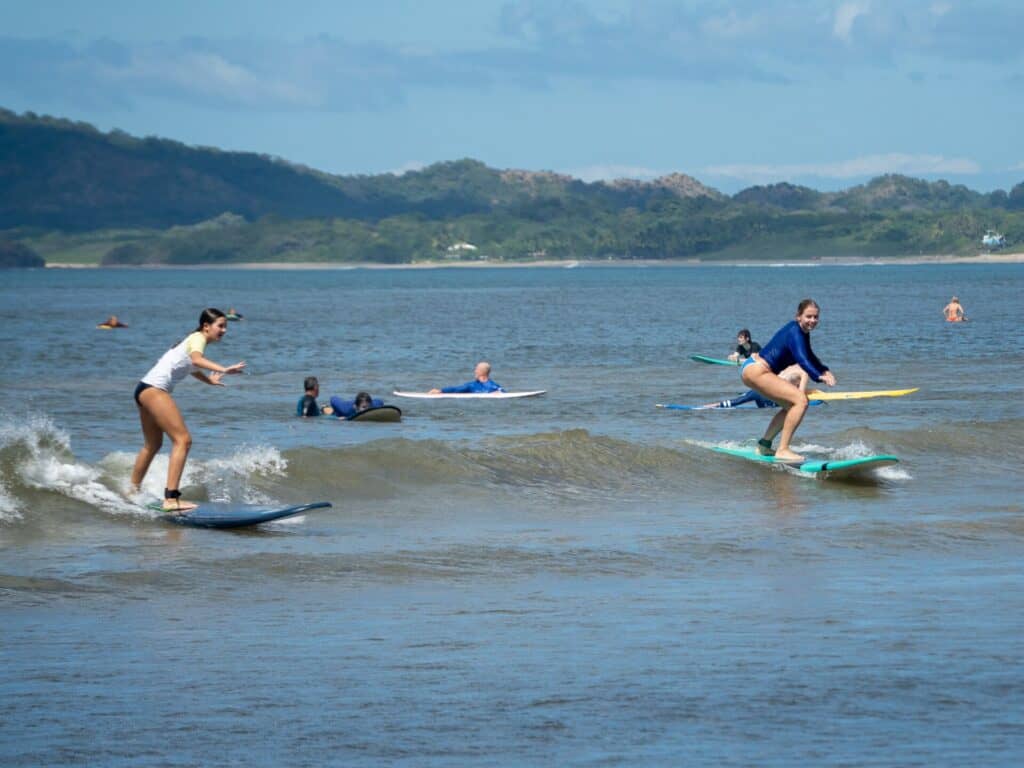
The most popular things to do in Tamarindo are surf lessons, sunset sailing tours, estuary boat tours and day trips to nearby beaches. You can also go fishing, diving, ziplining, horseback riding or on an ATV tour. Most tours pick you up at your hotel or leave from the beach in town. For more ideas, see our 25 things to do in Tamarindo, picked by locals.
On the water
- Surf lessons. Learning to surf is one of the main reasons people come to Tamarindo. Lessons usually last about 2 hours, and most schools have their own spot on the beach. See surf lessons and rentals in Tamarindo or our Best Surf Lessons list.
- Sunset sailing. Catamaran tours sail the bay in the afternoon, with time to snorkel, and come back after sunset. See our Best Catamaran Sailing Tours list.
- Estuary boat tours. Small boats go up the Tamarindo estuary into the mangroves of Las Baulas National Marine Park, where you may see crocodiles, birds and monkeys.
- Sportfishing. Boats leave from Tamarindo and Flamingo for half-day and full-day trips. See our Best Fishing Charters list.
- Scuba diving and snorkeling. Dive shops take you to the Catalina Islands and other sites nearby. See our Best Scuba Diving Centers list.
On land
- Ziplining: canopy tours are about 30 to 45 minutes from town. See our Best Canopy and Adventure Tours list.
- ATV tours: ride through dirt roads, hills and nearby beaches. See our Best ATV Tours list.
- Horseback riding: rides on the beach and in the countryside. See our Best Horseback Ride Tours list.
- Yoga and massage: Tamarindo has many yoga studios and massage spas, good for a rest day. See yoga in Tamarindo.
Turtle tours near Tamarindo
Leatherback sea turtles still nest on Playa Grande, across the estuary, but they’ve become very rare. Nesting in the eastern Pacific has dropped by more than 90 percent, according to NOAA Fisheries. The night tours on Playa Grande stopped in 2019, and the park’s beaches are closed to visitors from 6pm to 5am.
Turtle tours from Tamarindo now go to small beaches near Matapalo, about 40 minutes away, mostly from October to April. There you’ll mostly see black turtles, a kind of green turtle, and olive ridleys. Other tours go to Playa Ostional, about 1.5 to 2 hours south, where thousands of olive ridley turtles come ashore over a few nights in mass nestings called arribadas. Many tour agencies in Tamarindo book both tours.
Beaches and day trips nearby
- Playa Langosta: a walk south from town and quieter, a protected nesting beach open 6am to 6pm (until 5pm from October to February)
- Playa Grande: across the estuary, a long surf beach with few buildings
- Playa Avellanas and Playa Negra: surf beaches about 30 to 40 minutes south
- Playa Conchal and Playa Flamingo: about 35 to 45 minutes north, with calmer water for swimming and snorkeling
- Rincón de la Vieja National Park: a volcano park with hot springs and hiking, about 2 hours away
To compare tour companies, see tour agencies in Tamarindo or browse all things to do in Tamarindo.
Where to eat and drink in Tamarindo
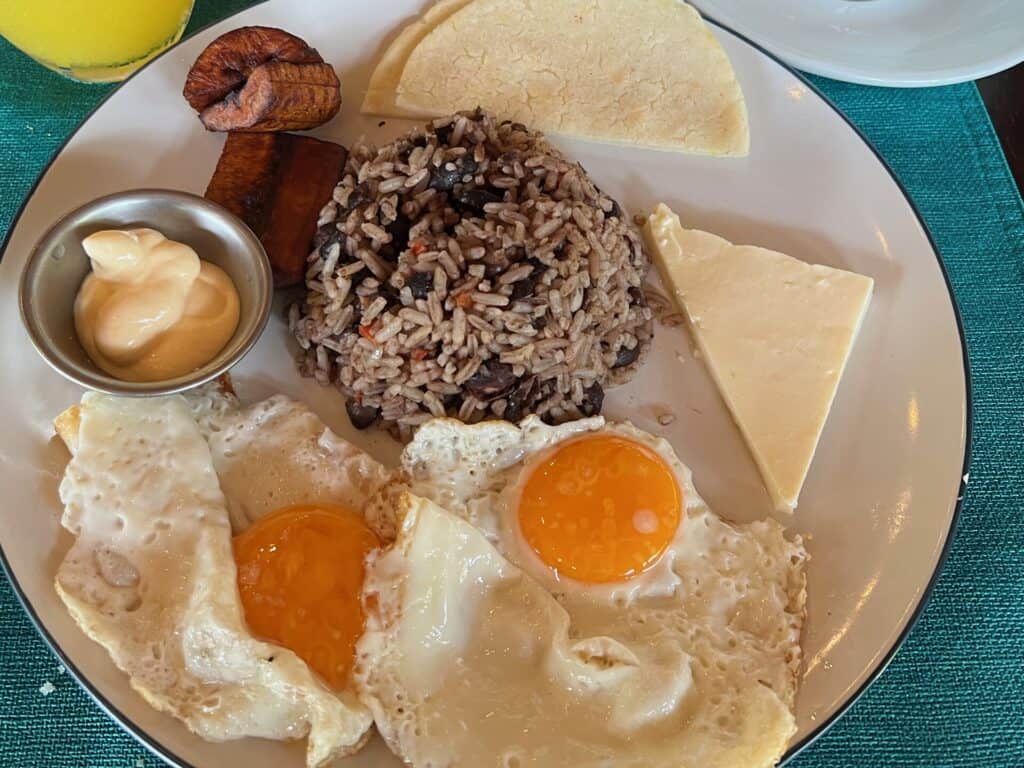
Tamarindo has restaurants for every taste, from beach bars and taco stands to sodas and steakhouses. A soda is a small family-run Costa Rican restaurant, and it’s where you’ll find the lowest-priced sit-down meals in town. Most restaurants are within walking distance of the beach.
What to eat
- Casado: the classic lunch plate of rice, beans, salad, plantain and meat or fish. At a local soda it costs about ₡4,500 to ₡5,000 (around $10), as of October 2026.
- Gallo pinto: rice and beans, the usual Costa Rican breakfast, often served with eggs.
- Fresh fish: many restaurants serve the catch of the day, often mahi-mahi or tuna.
- International food: Tamarindo has Italian, Argentine, Mexican, Japanese, Peruvian and more, thanks to the many people from other countries who live here.
Beachfront dinners and cocktails cost more, often close to US prices. To save money, eat a casado at a soda for lunch and save your dinner budget for one or two special nights.
Local tips
- In high season (December to April), book dinner a day ahead at popular places.
- Restaurant bills in Costa Rica usually include a 13% tax and a 10% service charge, so tipping extra is up to you.
- Some restaurants close for part of September and October. Check the hours before you go.
See all restaurants in Tamarindo, or start with our Best Restaurants in Tamarindo list, ranked by 4- and 5-star Google reviews. For coffee and breakfast, see cafes in Tamarindo. For nightlife, see bars and clubs in Tamarindo or our Best Clubs in Tamarindo list.
Practical tips: money, safety, getting around
Bring a card and some US dollars, use common-sense safety habits, and plan to walk or use a golf cart in town. Here’s what you need to know before you arrive.
Money
- US dollars are accepted almost everywhere in Tamarindo, but you’ll often get change in colones (₡). In 2026, one US dollar has been worth about ₡450 to ₡500.
- Most hotels, restaurants and tour companies take credit cards. Small sodas, stands and taxis may want cash.
- Use ATMs inside or next to banks, during the day if you can. See banks and ATMs in Tamarindo.
- Many Costa Ricans pay with SINPE Móvil, the phone payment app most Costa Ricans use. As a visitor, you’ll usually pay by card or cash.
Safety
- The US State Department rates Costa Rica Level 2, “Exercise Increased Caution,” because of crime (as of October 2026).
- Like most beach towns, Tamarindo has petty theft. Don’t leave bags or phones on the sand while you swim, and never leave anything in your car at the beach.
- Use the safe in your room for passports and extra cash.
- At night, walk on lit streets with other people, and take a taxi back if you’re staying outside the center.
- Crocodiles live in the estuary at the north end of the beach. Don’t swim near the river mouth.
- Watch for rip currents, especially when the waves are big. If you’re not sure, swim near other people or ask a surf school about the conditions.
- In an emergency, call 911.
Getting around
- On foot: the center is small and walkable. Most visitors who stay in town don’t need a car.
- Golf carts: a popular way to get around Tamarindo and Langosta. See golf cart rentals in Tamarindo or our Best Golf Cart Rentals list.
- Rental cars: the easiest way to do day trips. See car rentals in Tamarindo or our Best Car Rental list.
- Taxis: official taxis are red with a yellow triangle on the door. Agree on the price before you go if there’s no meter.
Health and everyday needs
Tamarindo has pharmacies, clinics, grocery stores and gyms, so you can find what you need without leaving town. See pharmacies, medical clinics and grocery stores in Tamarindo. Bring sunscreen and bug spray from home, since both cost more here.
Browse all Tamarindo businesses, from shuttles and surf schools to pharmacies, all listed free.
Tamarindo FAQ
Is Tamarindo closer to San José or Liberia?
Tamarindo is much closer to Liberia. Liberia airport (LIR) is about 1 hour 15 minutes away by car, while San José is about 4.5 to 5 hours away. If you can, fly into Liberia.
Is Tamarindo safe?
Tamarindo is a busy tourist town, and most visits go without problems, but petty theft is common. Keep valuables in your room safe, don’t leave anything in a parked car and walk on lit streets at night. The US State Department rates Costa Rica Level 2, “Exercise Increased Caution,” as of October 2026.
What are the best and worst months to visit Tamarindo?
December to April has the most sun and the least rain, but also the highest prices. September and October are the rainiest months, and some businesses close for a few weeks. May to August and November are a good middle ground, with lower prices and rain mostly in the afternoon.
Which side of Costa Rica has nicer beaches, Pacific or Caribbean?
It depends on what you want. The Pacific side, where Tamarindo is, has more beach towns, sunsets over the ocean and a long dry season from December to April. The Caribbean side is greener and quieter, with a strong Afro-Caribbean culture, and it gets rain in more months of the year.
What beaches are near Tamarindo?
Playa Langosta is a walk south of town, and Playa Grande is across the estuary to the north. Playa Avellanas and Playa Negra are about 30 to 40 minutes south. Playa Conchal and Playa Flamingo are about 35 to 45 minutes north and have calmer water for swimming.
Is there Uber in Tamarindo?
Uber works in Tamarindo, but there are very few cars and rides from the airport are often declined. Book a shuttle or taxi for your airport transfer, and walk, take a taxi or rent a golf cart in town.
Do I need colones in Tamarindo?
No, US dollars and credit cards are accepted almost everywhere in Tamarindo. It still helps to carry some colones for small sodas, stands and tips. Get them from a bank ATM in town.
Something out of date in this guide? Tell us and we’ll fix it.