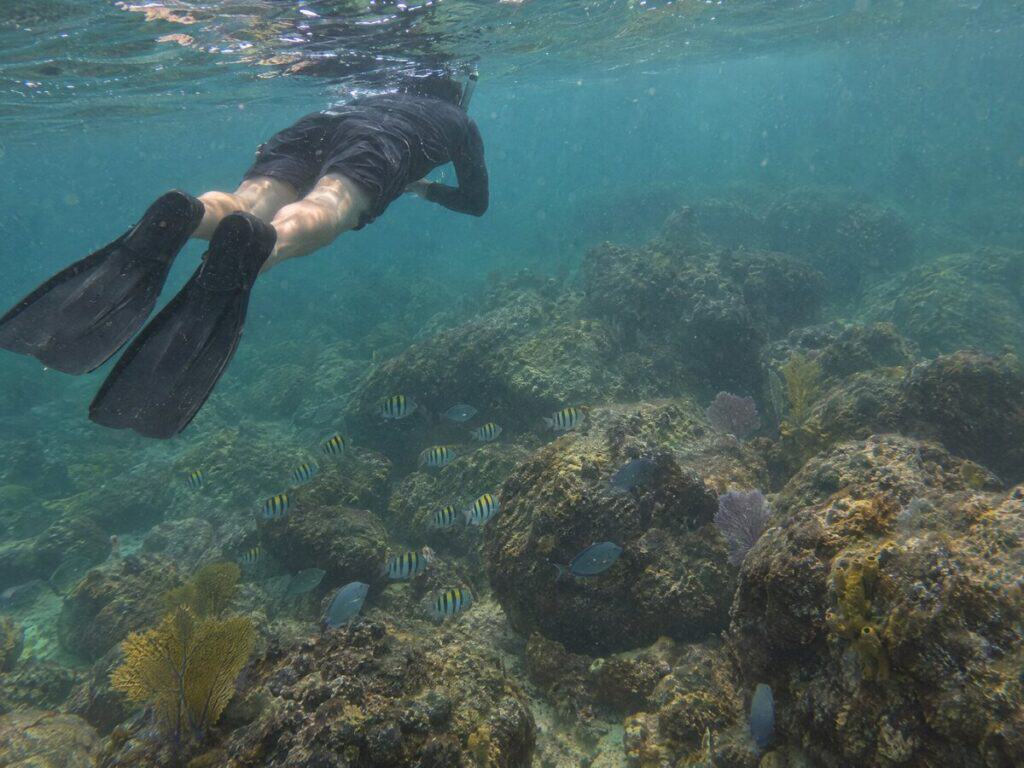
Tamarindo snorkeling mostly happens by boat, not from the beach. Tamarindo Beach is sandy, the water is often cloudy, and there are usually waves, so you won’t see much from shore on most days. For real snorkeling, take a tour. You can kayak to Isla Capitán in the bay, join a catamaran sail with a snorkel stop, or ride a boat to the Catalina Islands, about 30 to 60 minutes away.
We’re Tamarindo Guide, a free local business directory for Tamarindo, Costa Rica. We’ve lived here for over 10 years, and visitors often ask us where to snorkel. Here are the spots you can reach easily from Tamarindo, with honest notes on water clarity and prices as of October 2026. For more ideas, see our 25 things to do in Tamarindo and our travel guide to Tamarindo.
Can you snorkel in Tamarindo?
Yes, but not well from Tamarindo Beach itself on most days. The bottom is mostly sand, so there’s little for fish to gather around. Waves stir up the sand, and the estuary at the north end and rain in the green season (May to November) add cloudy water. You’ll have a much better time on a boat or kayak tour to rocky spots nearby.
The middle of the beach is also full of surf lessons, so it’s not a safe place to float face down.
One note if you searched “Tamarindo beach Culebra snorkeling”: that Playa Tamarindo (playa means beach) is on Culebra island in Puerto Rico. It’s a different place with a well-known snorkel reef.
Where to snorkel near Tamarindo
The easiest spots for snorkeling near Tamarindo are Isla Capitán, the rocks near Playa Langosta on calm days, Playa Conchal and the Catalina Islands. We picked these because you can reach them in a morning from Tamarindo and tours go to most of them every day.
- Isla Capitán: the small rocky island in Tamarindo Bay, inside Las Baulas National Marine Park. Kayak tours paddle out from Tamarindo Beach in about 20 to 40 minutes, then you snorkel around the rocks. Tour listings mention fish, rays, octopus and some coral. Departure times follow the tide.
- The rocks near Playa Langosta: at the south end of Tamarindo Beach, past the rocky point, the bottom turns to rock. On calm, small-wave days at mid to low tide, you can snorkel close to shore and see small fish, crabs and sea urchins. Expect a few fish, not a coral reef.
- Playa Conchal: about 35 to 45 minutes north by car. The water is usually calmer and clearer than in Tamarindo, and people snorkel near the rocks at the north end of the beach. It’s the easiest spot to snorkel on your own from shore.
- The Catalina Islands: rocky islands offshore, north of Tamarindo, and the main dive site in the area. Dive shops also run snorkel trips here, and it has the most marine life on this list.
Watch out for sea urchins on the rocks at all of these spots. Water shoes or fins help.
Snorkeling boat trips: Catalina Islands and Capitán Island
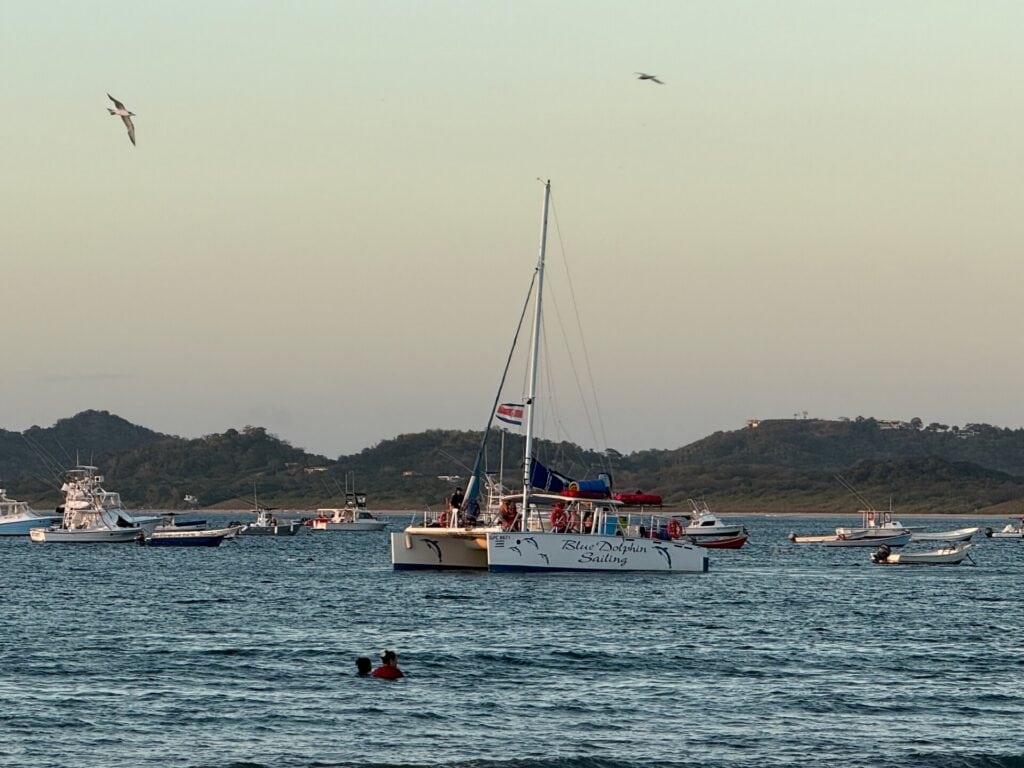
There are 3 main kinds of snorkel trips from Tamarindo: a kayak tour to Isla Capitán, a catamaran sail with one snorkel stop, and a dive-shop boat trip to the Catalina Islands. The Catalinas trip has the most to see, the catamaran is the most relaxed, and the kayak tour is the shortest and cheapest.
Kayak and snorkel tour to Isla Capitán
- Length: about 2.5 to 3 hours.
- Price: about $65 to $125 per person, as of October 2026, depending on the operator and what’s included.
- Leaves from: Tamarindo Beach. Many tours meet near the beach in front of town.
- Good for: active families and couples. You’ll need moderate fitness for the paddle.
Most tour agencies in Tamarindo can book this trip.
Catamaran tour with a snorkel stop
- Length: about 4 to 5 hours, morning or afternoon. The afternoon tours come back after sunset.
- Price: about $90 to $130 per adult, as of October 2026, usually with food, drinks and snorkel gear.
- Leaves from: Tamarindo Beach. A small boat takes you from the sand out to the catamaran.
- Good for: families and groups who want sailing first, snorkeling second.
The snorkel stop is usually in a calm bay along the coast. Crews only stop when the sea allows it, so some trips swim at a quiet beach instead. See our Best Catamaran and Sailing Tours in Tamarindo list, ranked by Google reviews, or browse all sailing tours in Tamarindo.
Catalina Islands snorkel trip
- Length: about 4 to 5 hours, leaving early in the morning.
- Price: about $80 to $120 per person, as of October 2026, with gear, a guide and snacks.
- Leaves from: some Tamarindo dive shops leave from Tamarindo Beach. Others drive you to Playa Flamingo or Playa Potrero, where the boat ride is shorter. Ask about hotel pickup when you book.
- What you do: usually 2 snorkel stops of about 40 minutes each, with a guide in the water.
Snorkelers often share the boat with divers, so ask where the snorkel stops will be before you pay. When the dry-season winds are strong, some boats go to calmer spots closer to Flamingo instead of the islands.
When is the water clearest?
There’s no season with Caribbean-clear water near Tamarindo. Visibility at the Catalina Islands usually ranges from about 5 meters (15 feet) on a poor day to 20 meters (65 feet) or more on a good day. It changes from day to day, so the season matters less than the conditions on the morning you go.
Dry season (December to April)
- Sunny, calm mornings and the most tours running.
- Strong offshore winds, called the Papagayo winds, blow from about December to April. They push warm surface water away from the coast, and colder water rises from below.
- A study of Gulf of Papagayo reefs measured water up to 7 to 9°C colder during this upwelling, with big plankton blooms. That plankton can turn the water green on some days.
- The same plankton feeds giant manta rays. Dive shops near Tamarindo report the most mantas at the Catalinas from about late November to early May.
Green season (May to November)
- The water is warm, usually 27 to 30°C (81 to 86°F), with no cold upwelling.
- Rain and rivers can make water near the shore cloudy.
- Rain usually falls in the afternoon, so morning trips are less affected.
Our tip: book a morning trip, and ask the dive shop about visibility in the past few days. They’re out every day and will tell you honestly.
Snorkeling vs. scuba diving near Tamarindo
Snorkeling keeps you at the surface, where you see the shallow rocks and anything that swims up. Scuba diving at the Catalina Islands takes you down to about 10 to 25 meters (30 to 80 feet), where most of the big animals are. If seeing manta rays and sharks is the goal, diving gives you a much better chance.
What you might see at the Catalinas
- Schools of tropical fish, moray eels, pufferfish and octopus
- White-tip reef sharks, usually resting near the bottom
- Sea turtles
- Eagle rays, mobula rays and, in season, giant manta rays
No sighting is certain. Wildlife changes from day to day.
Scuba options and prices (as of October 2026)
- Discover Scuba (no certification): a first dive for beginners. You practice in a pool, then make 1 or 2 shallow ocean dives with an instructor. About $170 to $200.
- 2-tank dive for certified divers: 2 guided dives at the Catalinas. About $130 to $160, with gear rental sometimes extra.
- Open Water course: the full beginner certification, usually 3 to 4 days. From about $550.
The Catalinas can have strong currents, so new divers should tell the shop their experience level. Compare dive shops on our Best Scuba Diving Centers in Tamarindo list, ranked by Google reviews.
What to bring and rental tips
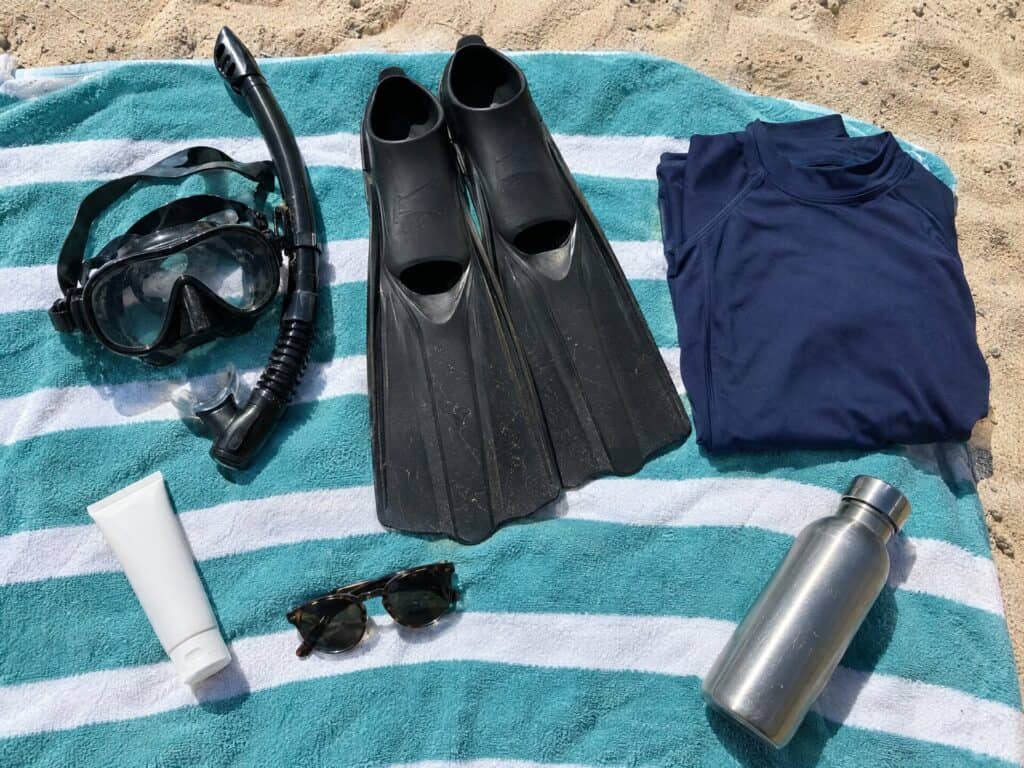
Most snorkel tours include a mask, snorkel, fins and a life vest. If you have a mask that fits you well, bring it. You’ll also want these:
- Reef-safe sunscreen: NOAA lists common sunscreen chemicals that can harm coral reefs, such as oxybenzone and octinoxate. Choose a mineral sunscreen without them.
- Rash guard or sun shirt: your back gets the most sun while you float. A long-sleeve shirt protects you better than sunscreen alone.
- Motion sickness medicine: the ride to the Catalinas crosses open water and can be rough, especially in windy months. Take medicine before you board, not on the boat.
Mask and gear tips
- Test the fit: hold the mask to your face without the strap and breathe in through your nose. If it stays on, it fits.
- Fogging: ask the crew for defog spray.
- Weak swimmers: wear the life vest or a float belt. Guides are used to helping beginners.
Respect the animals: don’t touch or stand on coral, and never touch or chase sea turtles, rays or sharks. Give them space, and don’t feed the fish.
Ready to plan a trip? Find snorkel trips and dive shops in Tamarindo.
Tamarindo snorkeling FAQ
Is snorkeling in Tamarindo worth it?
Yes, if you take a tour instead of snorkeling from the main beach. A kayak trip to Isla Capitán or a boat trip to the Catalina Islands gets you to rocky spots with fish, rays and turtles. Keep your expectations real: the water is greener and less clear than in the Caribbean.
Where else can you snorkel in Costa Rica?
Many divers point to Caño Island on the south Pacific coast and Cahuita National Park on the Caribbean coast. Both are a long trip from Tamarindo. Near Tamarindo, the Catalina Islands are the closest spot with a lot of marine life.
What time of year is good for snorkeling in Costa Rica?
On the Pacific side near Tamarindo, December to April brings the calmest mornings and the most manta rays, but cooler water and some plankton blooms. May to November is warmer, and morning trips often go well. Visibility depends more on the day than the month.
Can kids snorkel near Tamarindo?
Yes, many kids snorkel on catamaran tours, where crews help with gear and life vests in a calm bay. The Catalinas trip is longer and can be rough, so it suits older kids who swim well. Ask each tour about its minimum age.
Something out of date in this guide? Tell us and we’ll fix it.