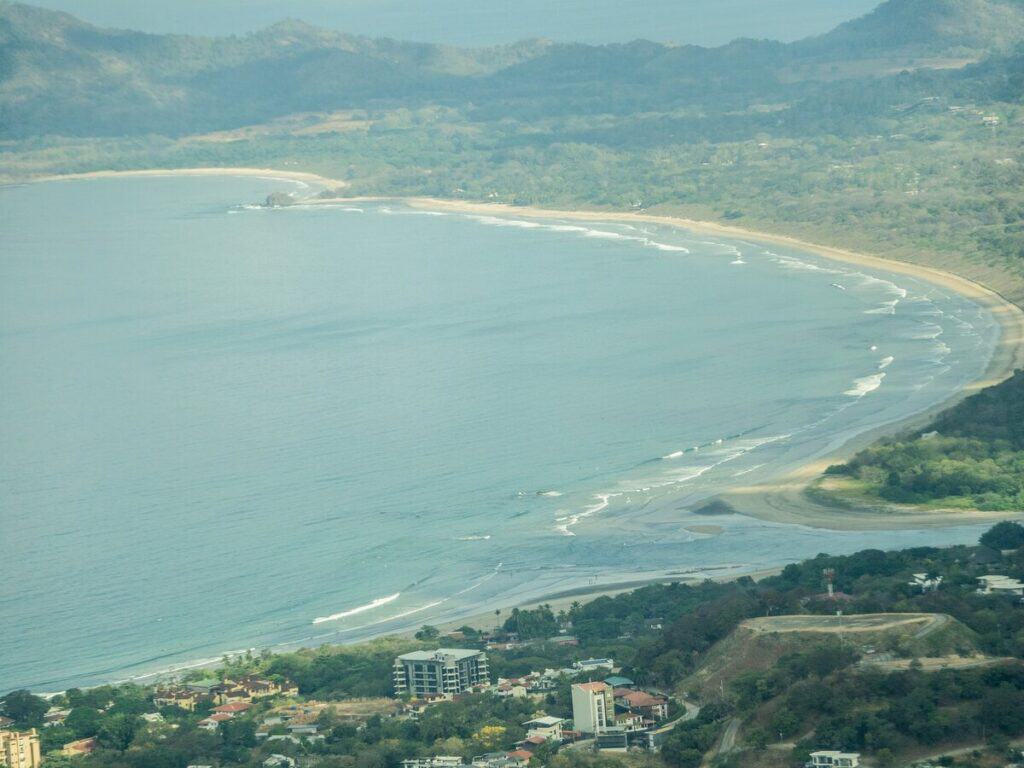
Leatherback turtles still nest on Playa Grande, across the estuary from Tamarindo, inside Las Baulas National Marine Park. But they’ve become very rare, and the night tours on Playa Grande stopped in 2019. To see a nesting sea turtle in 2026, take a night tour to a quieter beach about 40 minutes away. Or plan a trip to the mass nestings at Playa Ostional.
We’re Tamarindo Guide, a free local business directory for Tamarindo, Costa Rica. We’ve lived here for over 10 years, and turtle questions come up every October. Many websites still describe the old Playa Grande tours. This guide covers what’s true this season, from the park and the seasons to tour prices and how to help. For the rest of your trip, see our Tamarindo, Costa Rica travel guide.
Where can you see sea turtles near Tamarindo?
In 2026, you can see nesting sea turtles on small beaches near Matapalo, north of Playa Grande. You can also see them at Playa Ostional, about 1.5 to 2 hours south. Leatherbacks still come to Playa Grande, but only a handful each season, and the beach is closed to visitors at night.
Your options
- Beaches near Matapalo (about 40 minutes by car): Playa Minas and Playa Nombre de Jesús are small beaches where black turtles nest. Black turtles are a kind of green turtle. Local guides run night tours here, mostly from October to April.
- Playa Ostional (about 1.5 to 2 hours by road): a wildlife refuge known for arribadas, mass nestings when thousands of olive ridley turtles come ashore over a few nights.
- Playa Grande (across the estuary): the heart of Las Baulas National Marine Park. You can visit by day to walk or surf, but there’s no turtle watching here now.
Playa means beach in Spanish. Turtle tours run in the evening, so for daytime plans, see our 25 favorite things to do, or browse all things to do in Tamarindo.
What is Las Baulas National Marine Park?
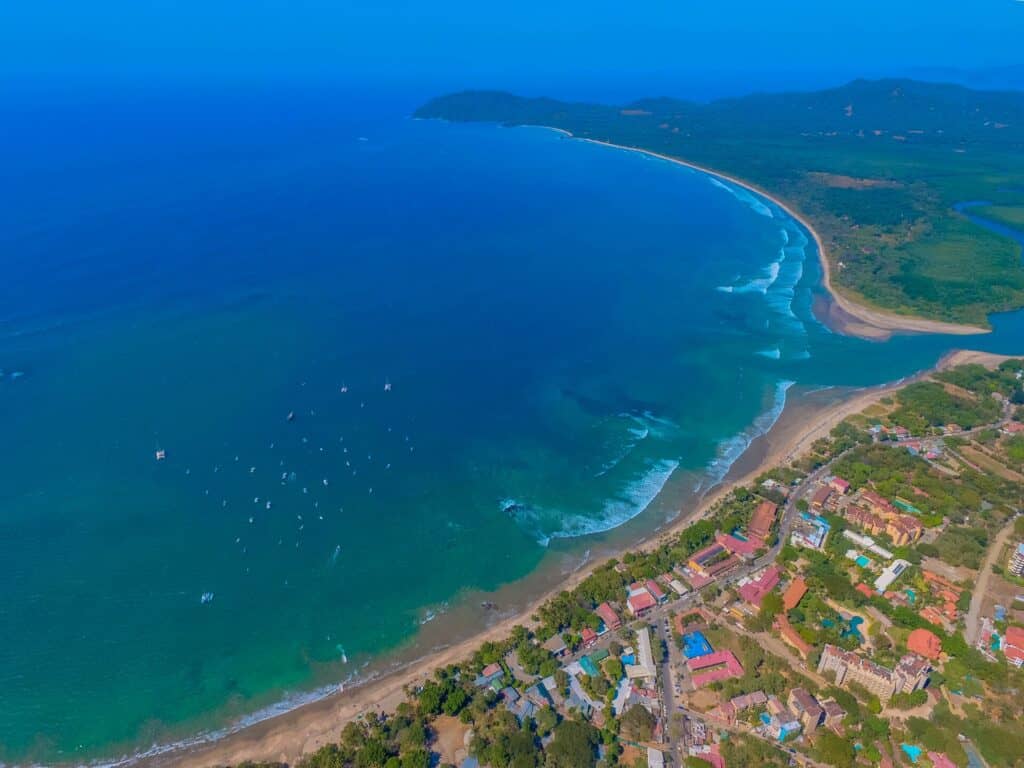
Las Baulas National Marine Park (Parque Nacional Marino Las Baulas de Guanacaste) protects the beaches, mangroves and ocean around Tamarindo. Costa Rica created it in 1991 to protect the leatherback, called baula in Spanish. SINAC, Costa Rica’s national park service, manages it.
What the park covers
- Nesting beaches: Playa Grande, Playa Ventanas and Playa Langosta, at the south end of Tamarindo. Small Playa Carbón, north of Ventanas, is also inside the park.
- Mangroves: the Tamarindo estuary, between town and Playa Grande, plus the smaller San Francisco and Ventanas estuaries.
- Ocean: about 171 square kilometers (66 square miles) of sea, reaching 12 nautical miles offshore, plus 7.7 square kilometers of land.
- Wildlife: SINAC counts 139 bird species. Crocodiles, iguanas and howler monkeys live in the mangroves.
The park is open every day from 6am to 6pm. From October to February, visitors must leave the beaches by 5pm (as of 2026). The Las Baulas National Marine Park office in Tamarindo sits at the north end of Calle Central, beside the estuary.
SINAC’s official page for the park says there is no turtle watching in the park. Visits to the estuary go with local guides, and you don’t need to book ahead. Costa Rica’s tourism board lists park entry at $12 for foreign visitors and ₡1,600 for residents, as of 2026. Colones (₡) are the local currency. Ask your guide whether the tour price includes the entry fee.
Why did the Playa Grande leatherback tours stop?
The tours stopped because almost no leatherbacks are left to see. In the 1988 to 1989 season, about 1,500 females nested on the park’s beaches. In recent seasons, only 2 to 8 females have nested per season in the whole park. That’s according to SosGrande, a conservation group in Playa Grande.
With so few turtles, the Matapalo local guides association stopped its night tours for good in 2019. The Leatherback Trust has studied the turtles on Playa Grande since the early 1990s. It reports that eastern Pacific leatherbacks have declined by more than 98% since 1990.
What caused the decline
- Past egg poaching: from 1970 to 1990, nearly 90% of the eggs laid here were taken. Leatherbacks need decades to grow up, so the loss showed years later.
- Fishing: adults get caught by accident in fishing lines and nets, especially off Chile and Peru.
- Buildings and lights: buildings near Playa Grande grew from 47 in 1991 to 487 in 2024. Bright lights confuse nesting females and hatchlings.
- Nest predators: raccoons, drawn by trash, and dogs dig up nests. SosGrande reports that 84% to 100% of nests have been lost to predators.
- Heat: warmer sand lowers hatching success and changes how many hatchlings are female.
That’s hard news before a vacation. But the beaches are still protected, and researchers patrol them every season.
When is leatherback nesting season?
Leatherback nesting season at Playa Grande runs from October to February or March. SINAC uses October to February for its beach rules, and researchers patrol from October to March. Females come ashore at night to dig a nest and lay their eggs. To plan around the rain, see Tamarindo weather by month.
Season facts
- Months: October to February or March.
- Time of day: at night. Playa Grande, Ventanas, Carbón and Langosta are closed to visitors from 6pm to 5am every day.
- Size: nesting females often reach 1.8 meters (6 feet) long, The Leatherback Trust says.
- Your chances: with only a few females a season, seeing a leatherback on any one night is unlikely.
How a night turtle tour works (and the rules)
Night turtle tours leave Tamarindo around sunset and drive to a nesting beach. Your guide walks the beach quietly until a turtle is found. You spend 1 to 2 hours on the beach, and the trip takes about 3 to 4 hours in total. Sightings depend on the night, and some nights there are none.
A typical night
- Pickup in Tamarindo is around 6pm.
- You drive about 40 minutes to a beach near Matapalo, or about 1.5 to 2 hours to Ostional.
- The guide explains the rules, then looks for tracks while the group waits.
- When a turtle starts laying eggs, the group moves in quietly, from behind her.
- You watch for a short time, then leave her to finish.
The rules
- Go with a guide. At Ostional, visitors must go with an accredited local guide during nesting events, as this Tico Times explainer on arribadas describes.
- No flash and no white lights. Guides use a red light only. Keep your phone screen dark.
- Dress dark. Wear dark clothes, plus long pants for the mosquitoes, as SINAC suggests.
- Stay back and stay quiet. Keep at least 10 meters (about 33 feet) away unless the guide says otherwise. Stay out of the turtle’s line of sight.
- Hands off. Never touch a turtle, an egg or a hatchling, and never block a turtle’s path to the water.
At Ostional, arribadas often begin a few days before the new moon. They happen all year, but the biggest ones usually come from July to November, especially in September and October. Dates can’t be promised far ahead.
How much do turtle tours cost and how to book
Turtle tours from Tamarindo cost about $65 to $70 per person to nearby beaches, as of October 2026. Ostional tours cost about $130 to $150 per person. These are prices local operators post online, and they usually include transport and a guide. For other tour costs, see real prices in Tamarindo.
Prices and times (as of October 2026)
- Beaches near Matapalo: about $65 to $70 per person, about 3 to 4 hours.
- Playa Ostional: about $130 to $150 per person, about 4 to 5 hours including the drive. Some prices include the refuge entry fee.
Booking tips
- Ask which beach and which species. If someone sells a night tour on Playa Grande, ask questions. SINAC says there’s no turtle watching in the park.
- Ask what happens if you see no turtles. Some operators offer a second try on another night.
- For Ostional, ask about timing. Operators watch for turtles gathering offshore.
Two local companies listed in our directory, Chelonia Tours and Sol Eco Adventures, offer turtle tours to these beaches. Many tour agencies in town also book them.
Other turtle species you might see
SINAC lists three sea turtle species in Las Baulas National Marine Park. They are the leatherback, the olive ridley and the East Pacific green turtle, called the black turtle (tortuga negra) in Costa Rica. Black turtles and olive ridleys are the ones you’re most likely to see on a tour near Tamarindo.
- Olive ridley (tortuga lora): a small turtle, and the one that nests in arribadas at Ostional. It nests all year, with the largest arribadas from July to November.
- East Pacific green turtle, or black turtle: a dark-shelled turtle that nests on the small beaches near Matapalo. Researchers have recorded nesting there through much of the year, and local tours run mostly from October to April.
- Hawksbill: SINAC doesn’t list it for the park, so don’t expect to see one here.
How to help protect nesting turtles
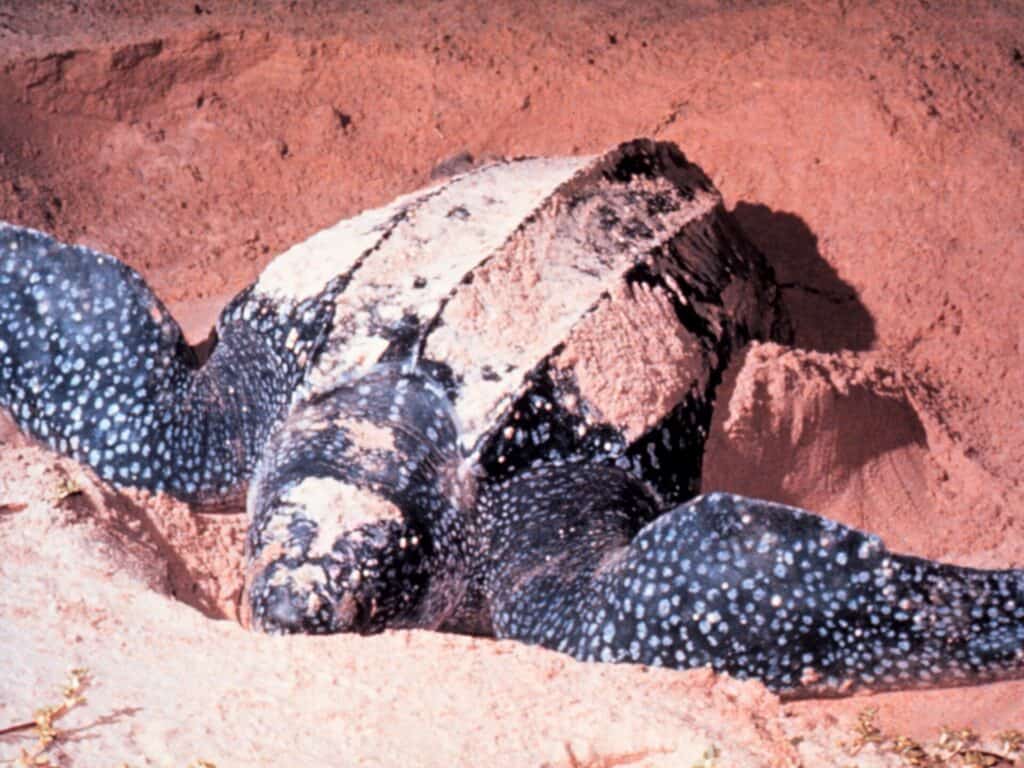
The most useful things are easy. Keep lights off the beach, stay off nesting beaches at night, and keep dogs and vehicles off the sand. You can also support the groups that patrol Playa Grande. Our Tamarindo Beach guide lists the other beach rules.
On the beach
- Lights out: at a beachfront hotel or rental in Playa Grande or Langosta, close the curtains and turn off outside lights at night.
- Stay off at night: Playa Grande, Ventanas, Carbón and Langosta are closed from 6pm to 5am.
- No driving on the sand: vehicles on the beach are against Costa Rica’s traffic law, and SINAC bans them in the park.
- No dogs on nesting beaches: dogs dig up nests.
- Take your trash with you: trash brings raccoons, and raccoons eat turtle eggs.
- If you see a turtle or hatchlings: stay back, keep their path to the sea clear, and don’t pick up hatchlings to help them.
- Report a problem: call Las Baulas park authorities at +506 8704-6444, the number SosGrande lists.
Support local conservation
- The Leatherback Trust: runs a research station at Playa Grande. Volunteers join beach patrols from October to March through Earthwatch. You can also donate or sponsor a nest.
- SosGrande: a Playa Grande community group that runs hatchling trips from January to March, beach cleanups and volunteer days.
Want to see turtles this season? Find turtle tours and estuary tours in Tamarindo.
Turtle tours near Tamarindo FAQ
Can you see leatherback turtles in Tamarindo?
It’s very unlikely. Only 2 to 8 leatherbacks have nested on the park’s beaches in recent seasons. The beach is also closed to visitors at night. There’s no leatherback tour you can book there in 2026.
Where can you see sea turtles in Costa Rica?
Near Tamarindo, go to Playa Ostional for olive ridley arribadas, or take a night tour to the beaches near Matapalo for black turtles. On the Caribbean coast, Tortuguero is famous for nesting green turtles.
What time of year can you see turtles in Costa Rica?
You can see turtles in Costa Rica in most months, but timing depends on the beach. Near Tamarindo, the biggest Ostional arribadas usually come in September and October. Nesting tours near Matapalo run mostly from October to April.
Where can I see baby sea turtles released in Costa Rica?
Near Tamarindo, SosGrande runs hatchling trips at Playa Grande from January to March. You help researchers check nests and watch hatchlings go to the sea. Some nesting tours also see hatchlings late in the season, but never pick one up yourself.
Something out of date in this guide? Tell us and we’ll fix it.