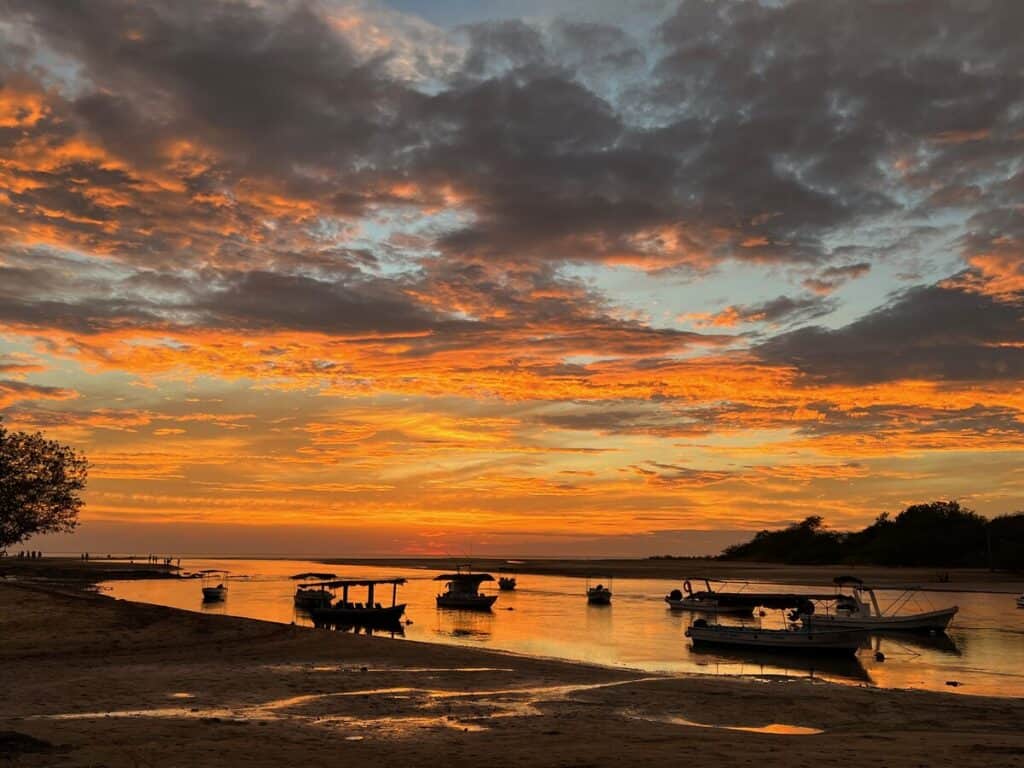
The Tamarindo estuary is the river mouth and mangrove forest at the north end of Tamarindo, Costa Rica. It separates the town from Playa Grande (playa means beach). A guided boat tour takes about 2 hours and goes up the river into the mangroves. You’ll likely see herons, egrets, crabs and iguanas, and often American crocodiles and howler monkeys. Shared boat tours cost about $35 to $65 per adult, as of October 2026.
We’re Tamarindo Guide, a free local business directory for Tamarindo. We’ve lived here for more than 10 years, and the estuary is right at the edge of town. This guide covers what you’ll see, boat vs. kayak, crocodile safety, when to go, prices and the small boat across to Playa Grande.
What is the Tamarindo Estuary?
The Tamarindo estuary (Estero de Tamarindo in Spanish) is where a river meets the ocean at the north end of Tamarindo Beach. Fresh water and salt water mix here, and the banks are lined with mangrove forest. It’s a protected area inside Las Baulas National Marine Park, managed by SINAC, Costa Rica’s national park service.
Some quick facts
- Protected area: the estuary was first protected in the 1980s as the Tamarindo Wildlife Refuge. Today it’s part of Las Baulas National Marine Park, which also protects the leatherback turtle nesting beach at Playa Grande. The Las Baulas park office sits beside the estuary at the north end of Calle Central, the main road.
- Important wetland: the Tamarindo mangroves were named a Ramsar site in 1993. Ramsar is the international treaty that protects important wetlands.
- Mangrove trees: red, black and white mangroves are the most common. Their roots shelter young fish, crabs and shellfish.
- Tides: the water level in the channels rises and falls a lot with the tide, so tour times change every day.
What wildlife will you see on an estuary tour?
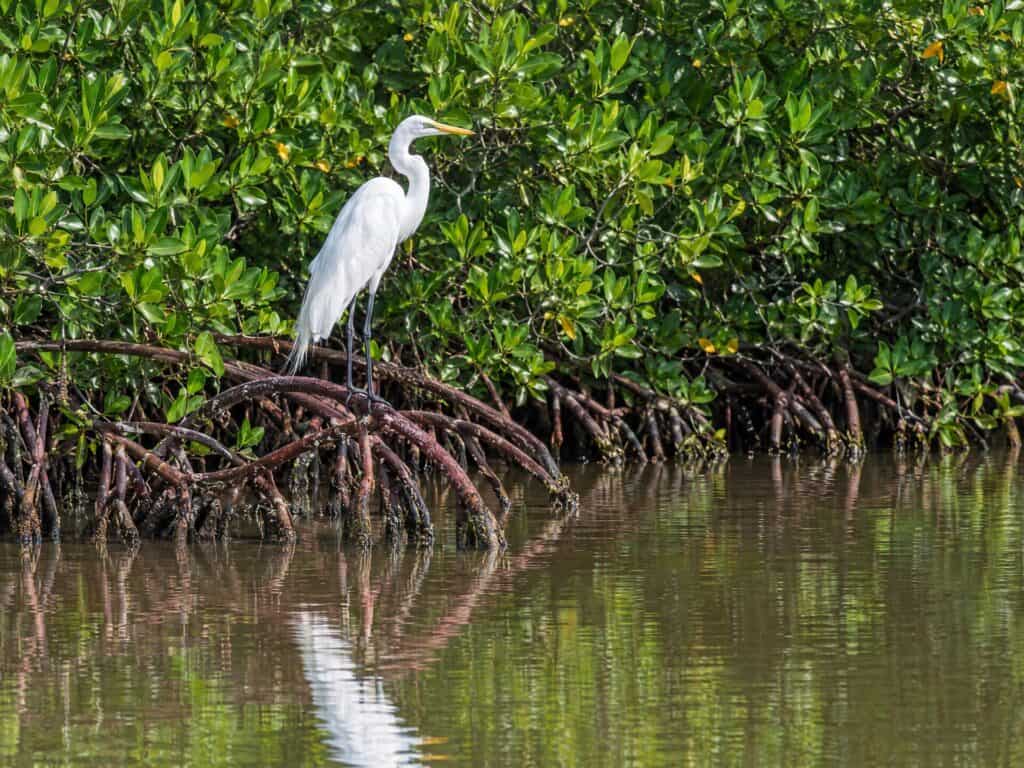
Birds are the main show on most estuary tours, followed by crocodiles, crabs, iguanas and howler monkeys. What you see changes with the tide, the season and luck.
What guides commonly point out
- Water birds: little blue herons, green herons, tricolored herons, yellow-crowned night herons, snowy egrets and white ibis.
- Hunters of the river: ospreys, common black hawks and ringed kingfishers fishing along the banks.
- American crocodiles: usually resting on a muddy bank or floating with only their eyes and nose above the water. You may see small young ones or a big adult.
- Howler monkeys: you’ll often hear them before you see them. They tend to stay back in the trees, so bring binoculars.
- Iguanas, crabs and fish: iguanas sun themselves on branches, colorful crabs climb the mangrove roots, and small fish jump across the water.
Some tours stop for a short walk on a dry stretch of forest to look for monkeys, if conditions allow. Ask your operator if that’s part of the trip.
Keep your expectations honest. Some visitors see a lot. Others see mostly birds and one or two small crocodiles. It’s a calm nature trip, not a zoo.
Boat tour vs. kayak tour
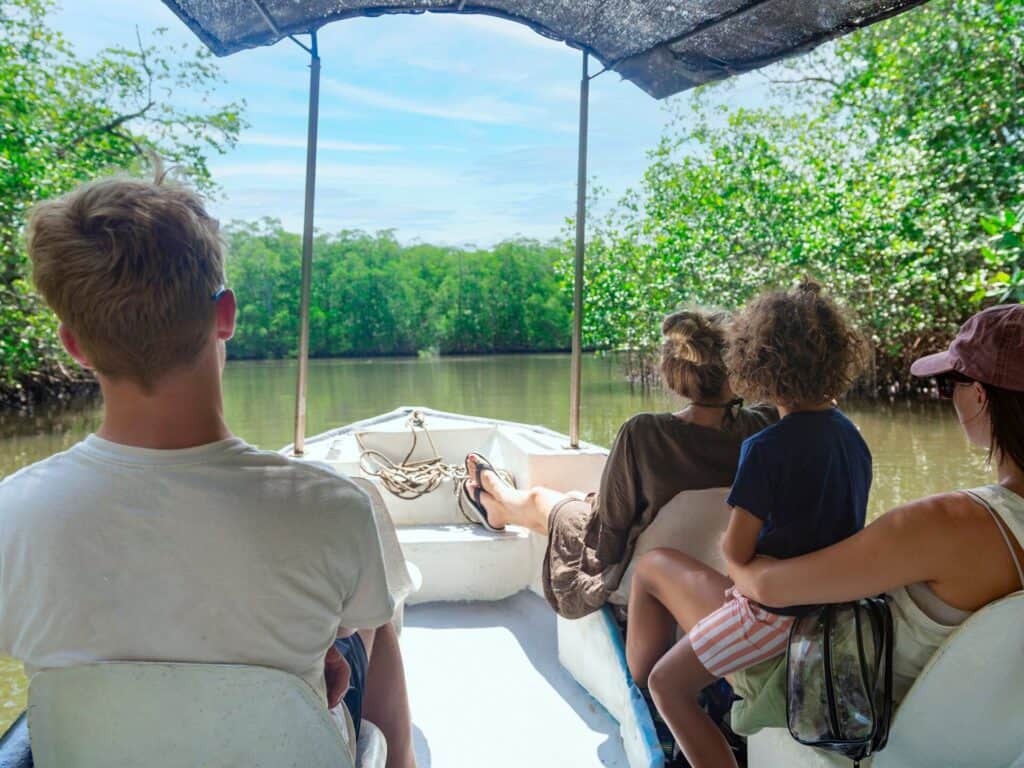
A boat tour is the easiest way to see the estuary, and it suits families, older travelers and photographers. A kayak tour is quieter and more active, and it reaches narrow channels. Both last about 2 to 2.5 hours with a local guide.
- Boat tour: a small motorboat, often a panga (an open fishing boat), with a captain and a bilingual guide. There’s no dock, so you usually wade in ankle to calf deep water and take a big step up into the boat. If you have trouble walking, tell the operator when you book.
- Kayak tour: a guided paddle in single or double kayaks, usually timed for high tide so there’s enough water in the channels. It suits active travelers and older kids.
- Stand-up paddleboard: some paddle shops in Tamarindo run paddleboard tours on calm water. Ask whether a trip goes into the estuary before you book.
We don’t recommend paddling the estuary on your own. Crocodiles live there, and the tidal current at the river mouth can be strong.
Are there crocodiles in Tamarindo, and are they dangerous?
Yes, American crocodiles live in the Tamarindo estuary, and they belong there. They’re usually shy, and attacks on people are rare. The risk is real, though, so don’t swim in or near the estuary or the river mouth.
According to National Geographic’s guide to the American crocodile, these crocodiles are far more likely to flee from people than to attack. Most stay in the estuary and the mangroves, and it’s rare to see one on the main beach.
Incidents have happened, and you may see them in the news. In July 2016, a crocodile attacked a US surfer in the estuary. Park rangers caught the animal a few months later and moved it away from town. Officials said people had been feeding it illegally, which made it bold. In March 2026, rangers caught a large crocodile in a storm drain in town and released it far from people.
Feeding is the main cause of problems. A University of Florida crocodile research poster explains that crocodiles that get fed lose their fear of people.
Simple rules near the estuary
- Don’t swim, wade or surf in or near the river mouth.
- Avoid swimming at dusk, at night or at dawn. SINAC says crocodiles are most active at dawn and dusk.
- Don’t walk across the river mouth to Playa Grande. Take the boat across instead.
- Keep kids and dogs away from the water’s edge near the estuary.
- Never feed a crocodile, and don’t get close for a photo.
- Follow posted signs. If you see a crocodile near the beach or homes, move away calmly and call 911 to report it.
The safest way to see crocodiles is from a guided boat, at a safe distance.
What is the best time of day for the estuary?
Most estuary tours run in the morning, but the exact start time depends on the tide. Operators set departures around the tide each day, so you’ll usually get your pickup time a day or two before. Mornings are cooler, and birds are often more active.
- High tide: boats and kayaks can go deeper into the narrow mangrove channels. Kayak tours almost always run near high tide.
- Low tide: muddy banks appear, and crocodiles often rest on them. Some guides say low tide gives better odds of seeing big crocodiles, but boats can’t go as far up the river.
- Dry season (December to April): sunny, hot and the busiest time in town. Book a day or two ahead.
- Green season (rainy season, roughly May to November): greener forest and fewer visitors. Rain often comes in the afternoon, so morning tours work well. Most tours run rain or shine.
How much does an estuary tour cost, and how do you book?
A shared 2-hour boat tour of the Tamarindo estuary costs about $35 to $65 per adult, as of October 2026. Kids usually pay less, and children under 4 often go free.
Typical prices (as of October 2026)
- Shared boat tour, about 2 hours: about $35 to $65 per adult. Kids age 4 to 11 often pay about $29 to $40.
- Private boat tour: about $80 to $125 per person, depending on group size.
- Guided kayak tour, 2 to 2.5 hours: about $55 to $65 per person.
Most prices include a guide, a captain and bottled water. Many include pickup in Tamarindo and Playa Langosta, but not all. Ask what’s included, including any park fee.
How to book
- Local operators: companies that run estuary trips include Tamarindo Estuary Boat Tours, Tamarindo Nature Tours and Chelonia Tours. For a paddle, Kayak Tours Tamarindo runs guided kayak trips.
- Tour offices and hotels: many book the estuary along with other outings. You’ll find more guided trips in our experiences in Tamarindo category.
- Meeting point: if you drive yourself, most boats leave from the riverbank at the north end of town, near Pangas Beach Club. Confirm the exact spot when you book.
Bring sunscreen, a hat, insect repellent and water. Wear sandals or water shoes you don’t mind getting wet.
Crossing to Playa Grande by boat
Small boats carry people across the river mouth from the north end of Tamarindo Beach to Playa Grande. The ride takes a few minutes and costs about $1 to $3 per person each way, as of 2026. Pay in cash. Colones (₡), the local currency, are easiest, and fares of about ₡1,000 to ₡1,500 are common.
- Where it leaves: boatmen wait at the river mouth at the north end of the beach, and on the Playa Grande side too.
- No fixed schedule: boats run during the day and usually stop by late afternoon, around 4 to 5:30pm. Ask what time the last boat back leaves.
- Tides matter: service can change with the tide and the waves.
- Don’t wade or swim across. This is crocodile habitat, and the current can be strong.
- By road: driving around to Playa Grande takes about 25 minutes.
Tamarindo Estuary FAQ
Is the Tamarindo estuary tour worth it?
Yes, if you enjoy birds and calm nature trips, the estuary tour is worth it. It’s short, close to town and costs less than many tours in Tamarindo. If you only want to see big crocodiles, keep your expectations modest, because sightings vary.
Can you swim in the Tamarindo estuary?
No, you shouldn’t swim in the Tamarindo estuary or near the river mouth. American crocodiles live there, and the tidal current can be strong. Swim in the middle or south part of Tamarindo Beach instead.
Is the estuary tour good for kids?
Yes, the boat tour is good for kids, and it’s one of the gentlest tours in Tamarindo. Kayak tours suit older kids who can paddle for 2 hours.
Can you see turtles on the estuary tour?
No, the estuary tour isn’t a turtle tour. Leatherback turtles still nest on Playa Grande, roughly October to February or March, but turtle watching inside the park stopped in 2019 and the beach closes at night. Turtle tours from Tamarindo now go to other beaches, so book one separately.
Most estuary tours pick you up in town, so you won’t need a car. Find estuary tours and other nature trips with tour agencies in Tamarindo.
Something out of date in this guide? Tell us and we’ll fix it.